

 Updated on 21 November 2025

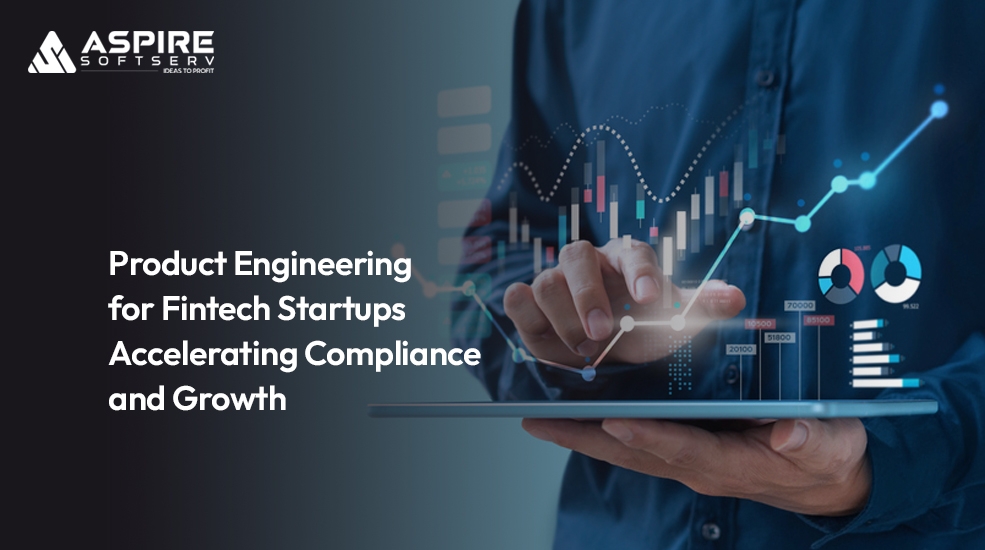
Over 60% of fintech startups face compliance challenges in their first two years often delaying launches, increasing costs, and eroding investor confidence. The solution? End-to-end product engineering services that embed compliance into every stage of development, transforming regulatory requirements from roadblocks into competitive advantages.
In today's financial technology landscape, the ability to move fast while staying compliant separates successful fintech ventures from those that struggle. Traditional development approaches that treat compliance as an afterthought lead to costly redesigns, failed audits, and missed market opportunities.
Why Product Engineering Services Matter in Fintech
Fintech startups operate in one of the most heavily regulated industries globally. Whether launching digital banking apps, lending platforms, payment gateways, or wealth management tools, compliance with KYC (Know Your Customer), AML (Anti-Money Laundering), GDPR, PCI DSS, and regional regulations isn't optional it's the foundation of customer trust and market access.
Modern digital product engineering services enable fintech companies to:
Launch compliant products 40% faster through agile development, API-first architectures, and automated compliance checks
Reduce compliance costs by up to 30% using low-code platforms and automated DevOps workflows
Scale confidently across multiple jurisdictions with modular, region-aware compliance logic
Build customer trust through transparent audit trails, real-time monitoring, and proactive risk management
Adapt instantly to regulatory changes without major system overhauls
A mid-sized lending platform recently cut customer onboarding time by 35% by implementing modular API-driven KYC and AML workflows demonstrating how strategic product development engineering services directly impact business outcomes.
Understanding the Compliance Landscape
Fintech startups navigate a complex regulatory environment:
Global Standards: GDPR (Europe), CCPA (California), PCI DSS (payment security), and SOC 2 (data security) apply across jurisdictions.
Regional Banking Laws: Each country maintains unique regulations the UK's FCA requirements differ from India's RBI guidelines or Singapore's MAS framework.
Payment Compliance: PSD2 in Europe, real-time payment systems like UPI, and emerging instant payment frameworks require specialized approaches.
AML/KYC Requirements: FATF guidelines and country-specific AML regulations demand sophisticated transaction monitoring, suspicious activity reporting, and customer due diligence.
This complexity makes product engineering consulting essential experienced partners bring frameworks and expertise that would take years to build in-house.
The Fintech Product Engineering Process
Strategic product engineering solutions follow a compliance-first approach across seven critical stages:
1. Ideation & Regulatory Mapping
Successful fintech products begin with simultaneous innovation and compliance planning. Teams identify target markets and their specific regulatory requirements, map mandatory compliance features to product capabilities, and assess licensing needs early.
This prevents costly redesigns. For example, knowing upfront that European expansion requires GDPR compliance influences database design, consent management, and data retention policies from the first sprint.
2. Architecture Design
Modern fintech products leverage cloud-native, microservices-based architectures offering key advantages:
Modularity: Individual compliance modules (KYC, AML, reporting) update independently without disrupting core functionality.
Scalability: Cloud-native designs automatically scale to handle transaction spikes while maintaining security standards.
Security by Design: Architectures incorporate encryption, zero-trust models, and granular access controls from the foundation.
Audit Capabilities: Event-driven architectures automatically log all transactions and user actions providing detailed audit trails regulators require.
API-First Design: Well-documented APIs enable rapid integration with RegTech tools, payment processors, and identity verification services.
3. Rapid Prototyping
Modern product engineering solutions leverage low-code platforms to build functional MVPs with compliance features from day one:
Build KYC workflows 50% faster using visual tools
Rapidly iterate based on customer feedback
Reduce coding errors through pre-built components
Lower development costs while maintaining quality
During prototyping, teams focus on core user journeys, essential compliance features, and integration points with critical third-party services.
4. Agile Development
Full-scale development uses agile methodologies optimized for fintech compliance:
Sprint Planning with Compliance: Each sprint includes both feature development and compliance requirements for example, delivering transaction history alongside the audit logging regulators require.
Continuous Testing: Automated tests verify compliance rules with every code commit, catching violations immediately.
DevSecOps Integration: Security scanning, dependency checks, and vulnerability testing run continuously throughout development.
API Development: Modern fintechs build extensive APIs for payment processing, identity verification, credit scoring, regulatory reporting, and third-party integrations.
5. Comprehensive Testing
Fintech products demand rigorous testing beyond functional verification:
Security Testing: Penetration testing and vulnerability scanning identify weaknesses before attackers do, including testing for SQL injection, XSS, and fintech-specific risks like transaction tampering.
Compliance Testing: Automated tests verify regulatory requirements. For payment-focused fintechs, PCI DSS 4.0 compliance testing is critical to secure transaction processing and avoid costly breaches.
Performance Testing: Load testing ensures platforms handle peak transaction volumes financial services require consistent performance.
User Acceptance Testing: Real users validate that compliance features don't create friction. The best fintech products make verification feel seamless.
6. CI/CD Deployment
Modern fintech companies deploy through continuous integration pipelines that maintain compliance:
Automated builds trigger with every code commit
Environment parity ensures staging mirrors production
Feature flags enable gradual rollouts
Audit trail integration logs every deployment
Compliance gates prevent non-compliant code from reaching production
7. Real-Time Monitoring & Continuous Improvement
Successful fintech products maintain continuous monitoring:
Security Monitoring: Continuous tracking for suspicious activities and unauthorized access attempts. Machine learning identifies anomalies indicating fraud or attacks.
Compliance Monitoring: Automated systems verify ongoing compliance transaction monitoring flags potential money laundering, data access logs prove privacy compliance, and audit reports generate automatically.
Regulatory Updates: Dedicated teams monitor regulatory changes, ensuring products adapt before new requirements take effect.
Overcoming Common Fintech Engineering Challenges
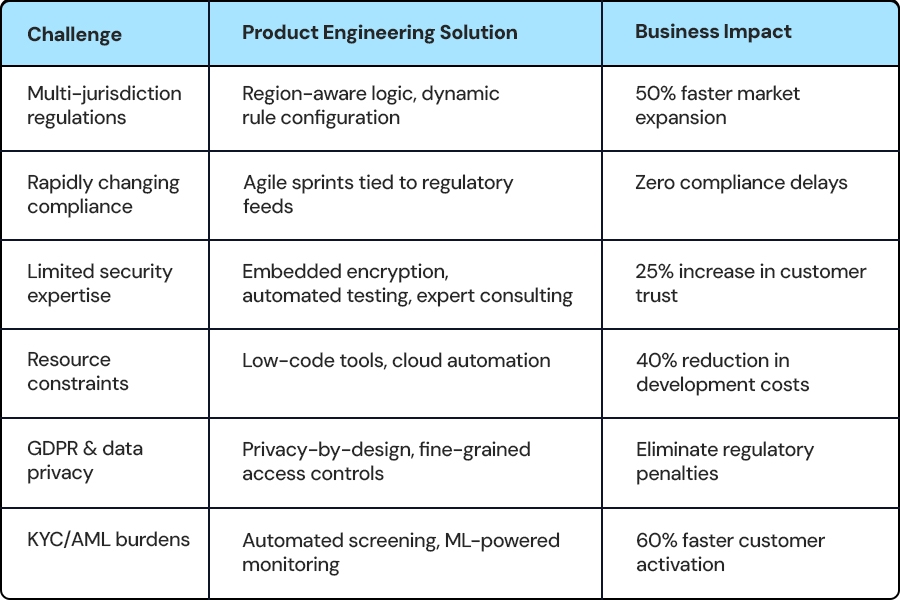
Best Practices from Leading Fintechs
Event-Driven Architecture
Modern fintechs use event-driven designs where every action generates events that other systems respond to, enabling real-time compliance flagging, instant alerts, automated auditing, and seamless third-party integration.
API-First Development
Building APIs before user interfaces ensures all functionality is programmatically accessible, accelerating partnerships, enabling multi-channel delivery, facilitating testing, and supporting regulatory systems that can query data programmatically.
Automated Compliance Controls
Machine learning-powered AML monitoring and automated KYC verification reduce manual errors by 90% while cutting operational costs. Modern systems screen transactions automatically, verify identities using AI-powered document analysis, monitor continuously for suspicious patterns, and generate regulatory reports automatically.
PCI DSS 4.0 Compliance
Modern fintech products require rigorous security standards for payment processing. Learn how product engineering services address PCI DSS 4.0 requirements and real-time payment security to protect sensitive financial data through tokenization, encryption, network segmentation, and regular security testing.
Cloud-Native Infrastructure
AWS, Azure, and GCP provide elastic scalability, built-in compliance certifications (SOC 2, ISO 27001), disaster recovery, global reach, and managed services essential for financial services.
RegTech Integration
Advanced regulatory technology platforms overlay dynamic compliance logic and automated reporting directly into core systems. Leading fintechs integrate transaction monitoring (Actimize), identity verification (Jumio, Onfido), sanctions screening (World-Check), and compliance workflow management tools.
Measurable Business Outcomes
Fintech startups that adopt comprehensive product development engineering services achieve quantifiable results:
Time-to-Market Acceleration
3-6 months faster launches compared to traditional approaches, allowing fintechs to capture market opportunities before competitors, start revenue generation earlier, and iterate based on real customer feedback faster.
Cost Reduction
35-40% reduction in compliance-related development costs through pre-built compliance modules, automated testing, cloud infrastructure, and faster development cycles.
Customer Acquisition
25% higher customer acquisition rates due to quick frictionless verification, transparent security practices, professional user experiences, and faster access to financial services.
Regulatory Success
Zero compliance penalties through proactive monitoring and automated rule enforcement, achieving first-time regulatory approvals, clean audits, and positive regulator relationships.
Global Expansion
Confident scaling with modular, jurisdiction-specific compliance modules enabling launches in new countries within weeks, customized compliance without rebuilding core systems, and automatic infrastructure scaling.
Real-World Impact
One digital wallet provider reduced their PCI DSS certification timeline from 8 months to 3 months by implementing automated security testing accelerating their Series B funding and market launch.
A lending platform decreased customer onboarding from 3 days to under 15 minutes by implementing AI-powered identity verification and automated credit decisioning, while maintaining full compliance.
Technology Stack for Compliant Fintech Products
Cloud Platforms: AWS, Azure, GCP for built-in compliance certifications, automatic scaling, global infrastructure, and managed services.
Architecture: Microservices with clear API contracts for independent deployment, technology diversity, team autonomy, and fault isolation.
DevOps: Automated CI/CD pipelines ensuring rapid secure delivery, consistent environments, automated testing, and compliance gates.
RegTech: Advanced tools providing dynamic compliance logic, automated reporting, data privacy management, and transaction monitoring.
Security: Embedded encryption, tokenization, automated vulnerability scanning, penetration testing, and SIEM systems.
Low-Code Platforms: Rapid development tools enabling fast prototyping, visual development, and quick iteration.
In-House vs. Partner-Led Product Engineering
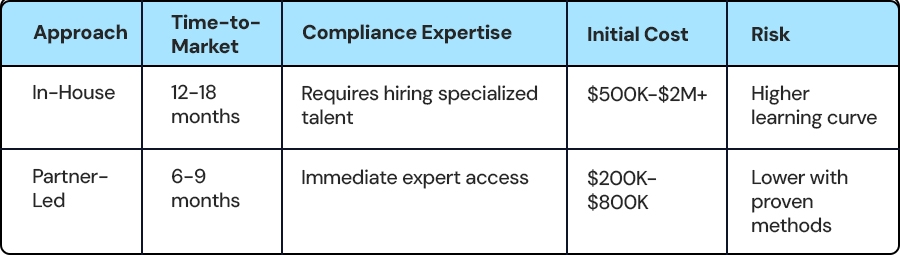
Most successful fintechs adopt a hybrid approach partner initially to accelerate launch, then gradually build internal capabilities in areas providing competitive differentiation.
The Future of Fintech Product Engineering
Several trends are shaping how product engineering services will evolve:
AI-Powered Compliance: Machine learning will automate compliance with predictive risk scoring, natural language processing for regulation interpretation, and computer vision for document analysis.
Embedded Finance: Non-financial companies will integrate financial services, requiring white-label solutions, API-first architectures, and flexible regulatory models.
Open Banking Evolution: API expansion beyond payments will enable comprehensive financial profiles, AI-powered advice, and enhanced fraud prevention.
DeFi Integration: Traditional fintech will interact with blockchain through hybrid custody solutions, smart contract integration, and tokenized assets.
Key Takeaways
End-to-end product engineering services transform regulatory compliance from a bottleneck into a competitive differentiator. By embedding compliance throughout development, leveraging automation, and adopting cloud-native architectures, fintechs can:
Launch compliant products 40% faster using agile methodologies and proven frameworks
Scale confidently across markets with modular, jurisdiction-aware compliance architecture
Build customer trust through transparent security and reliable service
Adapt instantly to regulations without major system overhauls
Reduce compliance costs by 30% through automation and efficient processes
Achieve competitive differentiation by making compliance a strength
Protect reputation through proactive risk management
The combination of modular design, API-first architecture, automated testing, and strategic partnerships enables fintech ventures to thrive in an era of rapid innovation and evolving regulations.
Ready to Accelerate Your Fintech Product?
AspireSoftServ's product engineering services help fintech startups build compliant, scalable platforms that drive growth and customer trust. Our team has delivered compliant solutions across digital banking, payments, lending, and wealth management.
We bring:
15+ years of fintech engineering experience
50+ successful regulatory approvals across jurisdictions
Deep expertise in PCI DSS, GDPR, AML, KYC, and regional compliance
Proven frameworks reducing development time by 40%
Schedule a 30-Minute Discovery Call →
Frequently Asked Questions:
1. What is product engineering in fintech and why is it important?
Product engineering in fintech involves building secure, compliant, and scalable digital financial products. It ensures fintech platforms meet regulations like KYC, AML, GDPR, and PCI DSS while maintaining fast, reliable user experiences.
2. What are the biggest compliance challenges fintech startups face today?
Fintech startups face challenges such as multi-jurisdiction regulations, data privacy requirements, KYC/AML checks, PCI DSS compliance, and rapidly changing regulatory updates. Without a compliance-first approach, these can cause delays, higher costs, and failed audits.
3. How does product engineering accelerate fintech product development?
Modern engineering approaches like microservices, API-first design, automated compliance testing, DevSecOps, and low-code prototyping help fintech startups launch 3–6 months faster while reducing errors, rework, and regulatory risks.
4. How can fintech startups stay compliant while scaling globally?
By implementing modular architectures, automated transaction monitoring, jurisdiction-aware rule engines, and continuous compliance updates, startups can enter new markets quickly without rebuilding their systems.
5. What role does DevSecOps play in fintech compliance?
DevSecOps integrates security and compliance into the development pipeline through automated scanning, compliance gates, audit logs, and continuous monitoring ensuring each deployment meets regulatory standards.
6. How does AspireSoftServ support fintech startups with compliance-first product engineering?
AspireSoftServ integrates compliance into every engineering stage from architecture and development to testing and deployment. With deep expertise in KYC/AML, PCI DSS, GDPR, and regional banking regulations, the team ensures faster approvals and audit-ready releases.
7. Why choose AspireSoftServ as a partner for fintech product engineering?
With 15+ years of experience and 50+ successful regulatory approvals, AspireSoftServ helps fintechs launch faster, stay compliant, and scale confidently. Startups benefit from proven frameworks, automated workflows, scalable architectures, and a dedicated team specialized in fintech innovation.
Want your product built the right way?