

 Updated on 11 September 2025

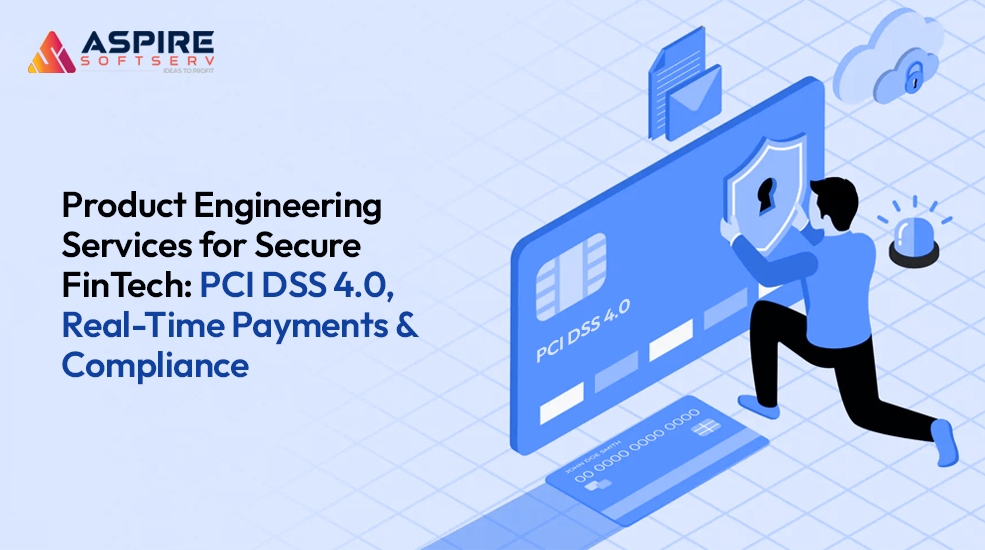
FinTech platforms must navigate complex compliance requirements while delivering secure, real-time payment solutions. Product engineering services specifically designed for compliance acceleration help organizations achieve PCI DSS 4.0 readiness, integrate modern payment rails, and maintain regulatory standards without compromising innovation speed.
Key compliance outcomes:
PCI DSS 4.0 compliance achieved in 3-4 months vs 12-18 months
Real-time payment integration with built-in compliance controls
Automated compliance monitoring reducing audit preparation by 80%
Regulatory change adaptation in weeks instead of months
PCI DSS 4.0: Engineering for Compliance
The updated PCI DSS 4.0 standard introduces new requirements that demand architectural thinking from the engineering phase. Product development engineering services must embed these controls at the foundation level.
Core PCI DSS 4.0 Requirements for FinTech Platforms
Network Segmentation & Scope Reduction:
Software-defined network perimeters isolating card data environments
Micro-segmentation between services handling sensitive payment data
Network traffic monitoring with automated anomaly detection
Zero-trust networking principles with encrypted service-to-service communication
Enhanced Authentication Controls:
Multi-factor authentication mandatory for all administrative access
Hardware security modules (HSM) for cryptographic key management
Biometric authentication integration for high-risk transactions
Session management with automatic timeout and re-authentication
Continuous Security Validation:
Automated vulnerability scanning integrated into CI/CD pipelines
Real-time security monitoring with SIEM correlation rules
Quarterly penetration testing with automated evidence collection
Infrastructure-as-code ensuring reproducible compliance validation
Tokenization Strategy for PCI Scope Minimization
Format-Preserving Encryption Implementation:
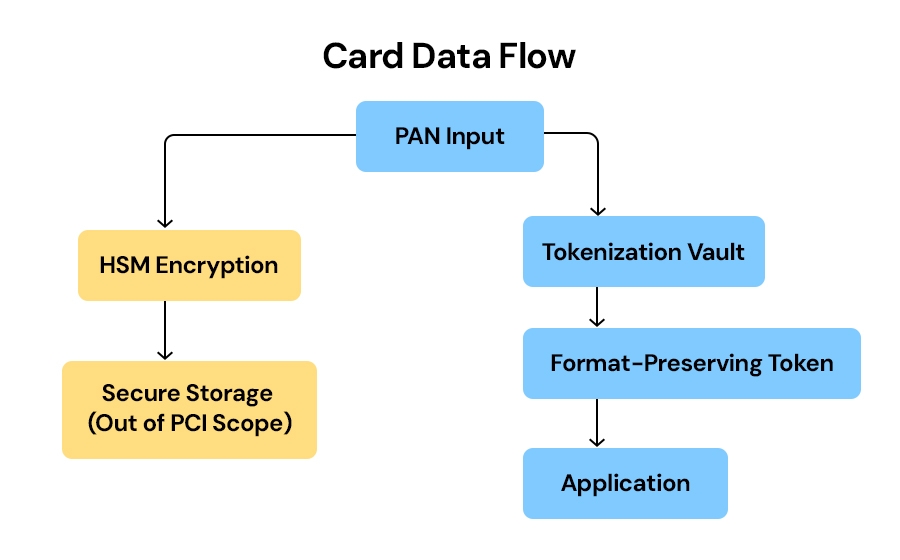
Technical Benefits:
Need PCI DSS 4.0 compliance architecture review? Schedule consultation with our product engineering consulting team specializing in payment compliance.
Real-Time Payment Rails: Compliance-First Integration
Modern payment systems require instant processing while maintaining strict regulatory compliance. Digital product engineering services ensure seamless integration without compromising security or audit requirements.
FedNow & RTP Compliance Architecture
ISO 20022 Message Processing:
Real-time message validation against regulatory schemas
Automated compliance checking for payment data elements
Audit trail generation for all payment message transformations
Error handling with regulatory notification requirements
Fraud Prevention & Risk Management:
Real-time transaction monitoring with ML-based risk scoring
Automated holds for suspicious transactions per regulatory guidelines
Risk-based authentication for high-value instant payments
Compliance reporting for unusual transaction patterns
Settlement & Reconciliation:
Immutable ledger design for audit trail requirements
Real-time settlement monitoring with exception handling
Automated reconciliation with traditional payment rails
Regulatory reporting automation for payment statistics
SEPA Instant & Cross-Border Compliance
European Payment Regulations:
PSD2 Strong Customer Authentication (SCA) implementation
GDPR compliance for payment data processing
AML/CTF screening for cross-border transactions
MiCA regulation preparation for digital asset payments
Technical Implementation:
OAuth 2.1 with FAPI security profiles for API access
Consent management with granular permission scopes
Data retention policies with automated deletion workflows
Cross-border data transfer controls with adequacy decisions
AML/KYC Compliance Engineering
Anti-money laundering and know-your-customer requirements demand sophisticated engineering solutions that balance compliance effectiveness with user experience.
Automated Compliance Screening
Real-Time Transaction Monitoring:
Machine learning models for behavioral analysis and anomaly detection
Sanctions screening against OFAC and global watch lists
Transaction pattern analysis with risk scoring algorithms
Automated suspicious activity report (SAR) generation
Customer Due Diligence Automation:
Identity verification integration with biometric validation
Enhanced due diligence workflows for high-risk customers
Beneficial ownership identification for corporate accounts
Ongoing monitoring with periodic re-verification triggers
Regulatory Reporting Framework:
Automated CTR (Currency Transaction Report) filing
BSA (Bank Secrecy Act) compliance data collection
Cross-jurisdictional reporting with data localization
Audit trail preservation with immutable storage
Risk-Based Authentication for Compliance
Adaptive Security Controls:
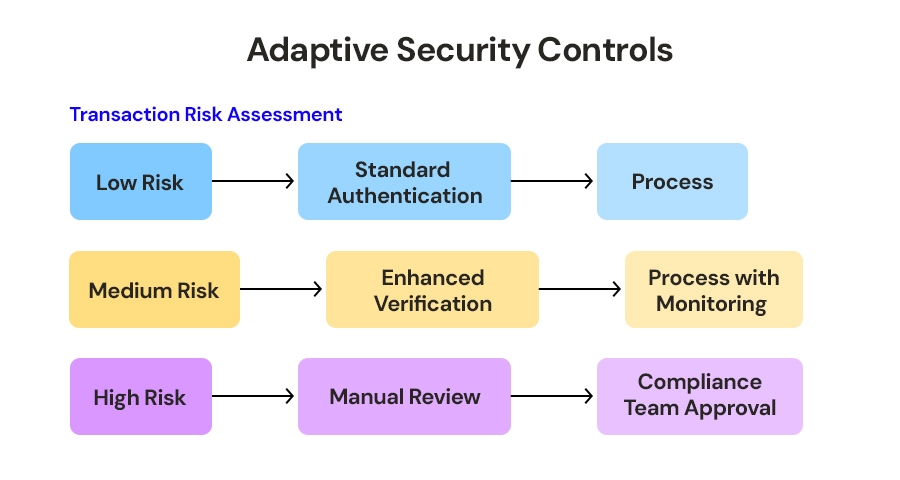
Implementation Components:
Device fingerprinting with behavioral biometrics
Geolocation analysis with travel pattern recognition
Transaction velocity monitoring with dynamic limits
Step-up authentication for regulatory thresholds
Open Banking Compliance Architecture
Open Banking regulations require secure API architectures that protect customer data while enabling third-party access. Product engineering services must implement these standards from the ground up.
Technical Standards Implementation
FAPI (Financial-grade API) Security:
mTLS (mutual TLS) for API authentication and authorization
JWT with asymmetric signatures for token validation
Request object signing for payment initiation security
Certificate-based client authentication with revocation checking
Consent Management Compliance:
Granular permission scopes with time-bound access
Real-time consent revocation with immediate effect
Consent audit trails with regulatory compliance validation
Data sharing transparency with customer dashboards
Cross-Border Data Protection
GDPR & Privacy Regulations:
Data minimization principles in API design
Privacy-by-design with purpose limitation enforcement
Cross-border data transfer controls with adequacy assessments
Right-to-be-forgotten implementation with data deletion workflows
Compliance Testing & Validation Framework
Ensuring ongoing compliance requires systematic testing and validation processes integrated into development workflows.
Automated Compliance Testing
Regulatory Rule Validation:
Automated testing of AML/KYC rules against test scenarios
PCI DSS control effectiveness testing in CI/CD pipelines
Payment regulation compliance verification for new features
Data protection impact assessment (DPIA) automation
Penetration Testing for Compliance:
OWASP Top 10 vulnerability assessment for payment applications
API security testing with FAPI compliance validation
Social engineering assessments for human security factors
Red team exercises simulating regulatory compliance attacks
Audit Preparation Automation
Evidence Collection Systems:
Automated log collection with regulatory retention policies
Control effectiveness documentation with continuous monitoring
Compliance reporting dashboards with real-time status updates
Audit trail preservation with cryptographic integrity verification
Compliance Use Case: Digital Wallet Implementation
A practical example of how product engineering consulting addresses multiple compliance requirements in a real-world FinTech application.
Multi-Jurisdiction Compliance Challenge
Requirements:
PCI DSS Level 1 compliance for card storage and processing
PSD2 compliance for European market entry
AML/KYC compliance across multiple jurisdictions
Real-time payment integration with fraud prevention
Engineering Solution Architecture
Compliance-Driven Design:
Tokenization vault with HSM integration reducing PCI scope by 70%
API gateway with FAPI security profiles for Open Banking compliance
ML-based fraud detection with explainable AI for regulatory requirements
Multi-region deployment ensuring data sovereignty compliance
Technical Implementation Results:
Compliance Timeline: 4 months to full regulatory approval vs 12+ months traditional approach
Audit Efficiency: 90% reduction in manual evidence collection through automation
Cost Optimization: 50% lower ongoing compliance costs through architectural design
Market Speed: Simultaneous launch in 6 jurisdictions with unified compliance framework
Technology Stack for Compliance-Focused FinTech
Digital product engineering services require specific technology choices that prioritize regulatory compliance alongside performance and scalability.
Compliance-First Technology Selection
Component | Technology | Compliance Benefit |
API Security | Kong, Envoy with FAPI plugins | Open Banking standards compliance, mTLS automation |
Data Encryption | HashiCorp Vault, AWS KMS, HSM integration | PCI DSS key management, FIPS 140-2 compliance |
Identity Management | Auth0, Keycloak with compliance modules | AML/KYC integration, audit trail generation |
Database | PostgreSQL with encryption, audit triggers | GDPR compliance, data retention automation |
Monitoring | Splunk, ELK Stack with compliance dashboards | Real-time compliance monitoring, regulatory reporting |
Container Security | Falco, Twistlock with compliance policies | Runtime security, vulnerability management |
Regulatory Reporting Infrastructure
Automated Compliance Reporting:
Real-time regulatory reporting with data validation
Cross-jurisdictional reporting format adaptation
Audit trail generation with immutable timestamping
Compliance dashboard with regulatory status monitoring
Compliance Requirements Prioritization
A structured approach to implementing product development engineering services with compliance as the primary focus, organized by regulatory criticality.
Critical Compliance Requirements (Must-Have)
PCI DSS 4.0 Network Controls: Network segmentation and tokenization for scope reduction
AML/KYC Screening: Real-time sanctions screening and customer due diligence
Data Protection: Encryption at rest and in transit with key management
Authentication Controls: Multi-factor authentication and privileged access management
Important Compliance Requirements (Should-Have)
Open Banking API Security: FAPI implementation with consent management
Real-Time Payment Fraud Prevention: ML-based risk scoring with automated holds
Regulatory Reporting: Automated compliance reporting with audit trail preservation
Cross-Border Data Controls: Data localization with privacy regulation compliance
Enhanced Compliance Features (Nice-to-Have)
Advanced Threat Detection: Behavioral analytics with anomaly detection
Compliance Automation: Infrastructure-as-code with policy validation
Risk-Based Authentication: Adaptive security controls with contextual analysis
Regulatory Change Management: Automated policy updates with impact assessment
FAQ: FinTech Compliance Engineering
Q: How long does PCI DSS 4.0 compliance take with product engineering services?
A: With digital product engineering services focused on compliance-first architecture, PCI DSS 4.0 compliance typically takes 3-4 months compared to 12-18 months with traditional approaches. This acceleration comes from designing tokenization, network segmentation, and security controls at the architectural level rather than retrofitting existing systems.
Q: Can real-time payments be integrated without compromising compliance?
A: Yes, product engineering consulting specializes in compliance-first integration of FedNow, RTP, and SEPA Instant payments. The key is implementing ISO 20022 message validation, real-time fraud monitoring, and regulatory reporting from day one, ensuring compliance controls are built into the payment flow rather than added afterward.
Q: What's the most efficient way to handle multi-jurisdiction compliance?
A: A unified compliance architecture with jurisdiction-specific modules is most efficient. This approach uses common security controls (like tokenization and encryption) while implementing region-specific requirements (like GDPR consent management or PSD2 SCA) as configurable compliance modules.
Q: How do compliance requirements affect FinTech platform architecture?
A: Compliance requirements should drive architectural decisions, not constrain them afterward. Product development engineering services design microservices architectures with compliance boundaries, implement zero-trust networking for PCI scope reduction, and use event-driven patterns for audit trail generation and regulatory reporting automation.
Get Started with Compliance-Focused Product Engineering
Building compliant FinTech platforms requires specialized expertise in regulatory requirements, security architecture, and payment system integration. Our product engineering services accelerate compliance achievement while maintaining innovation velocity.
Compliance Engineering Expertise
PCI DSS 4.0 Specialization: Tokenization architecture and scope reduction strategies
Payment Rails Integration: FedNow, RTP, SEPA Instant with built-in compliance
AML/KYC Automation: Machine learning with regulatory explainability
Open Banking Implementation: FAPI security and consent management
Multi-Jurisdiction Compliance: Unified architecture with regional adaptability
Next Steps
Get a comprehensive compliance architecture review to evaluate your current compliance posture, identify PCI DSS 4.0 implementation strategy, design real-time payment integration roadmap, assess AML/KYC automation opportunities, and create an Open Banking compliance timeline.
Ready to accelerate your FinTech compliance with expert product engineering services? Our compliance-focused engineering team can help you achieve PCI DSS 4.0 readiness, integrate real-time payments, and maintain regulatory standards across multiple jurisdictions.
Need Help with Compliance?