

 Updated on 27 January 2026

Cloud-first product engineering means designing for scale, performance, and monetization from the first line of code, not retrofitting cloud computing later when the product starts breaking under real traffic and complex revenue models. For CTOs and founders in the US market especially those building HCM platforms, HealthTech solutions, or B2B SaaS products this shift protects runway, valuation, and speed of iteration in the first 24–36 months of the product's life.
The difference between cloud-first and cloud-later often determines whether your platform can close enterprise deals, pass HIPAA or SOC2 audits on schedule, or scale without burning through Series A funding on emergency infrastructure rewrites.
Who This Is For (And Who It's Not)
This approach is designed for founders and CTOs building platforms where infrastructure decisions directly impact business outcomes. If you're leading a HealthTech startup preparing for hospital system integrations, an HCM SaaS platform competing for enterprise accounts, or a B2B application where compliance certifications gate revenue, cloud-first architecture isn't optional it's your competitive advantage. This is particularly relevant for teams at the Seed to Series B stage, where architectural decisions made in the first six months determine whether you can scale efficiently or face costly re-platforming when traction arrives.
Why "Cloud Later" Kills Scale, Performance, and Revenue
A "cloud later" mindset treats infrastructure as something to clean up after product–market fit, but by then core cloud architecture is already optimized for a single-region, monolithic setup. For US HealthTech startups, moving to cloud later often delays HIPAA audits by 6–9 months directly impacting enterprise onboarding. One medical scheduling platform lost three enterprise contracts worth $400K ARR because their infrastructure review revealed single points of failure and no disaster recovery plan both easily preventable with cloud-first design.
Key risks of deferring cloud architecture decisions:
Hidden scale ceiling: Without horizontal elasticity, viral growth quickly causes latency and outages that damage brand reputation and increase customer acquisition cost
Performance bottlenecks baked in: Tight coupling makes it impossible to tune performance per workload or region, leading to poor user experience
Monetization blockers: Usage-based pricing, tiered SLAs, or geo-specific offerings require metering and isolation patterns that are extremely difficult to bolt on later
Security and compliance gaps: Retrofitting cloud computing security architecture under audit pressure is far more expensive and often results in lost enterprise deals
Slower sales cycles: Cloud-later architectures raise red flags during procurement reviews, increasing sales cycles from 90 to 180+ days

If you're evaluating whether your product architecture is truly cloud-first, our Product Strategy & Consulting services often reveal risks early before they impact your next funding round or enterprise deal.
Cloud-First vs Cloud-Later: Architecture and Business Impact
The architectural choices you make in the first 90 days create either leverage or liability for the next three years of growth.
| Dimension | Cloud-First Approach | Cloud-Later Approach |
|---|---|---|
| Design Baseline | Stateless services, multi-AZ by default, infrastructure as code (IaC) | Single-region monolith, manual environments, ad-hoc scripts |
| Scaling | Auto-scaling groups, managed databases, event-driven components | Vertical scaling, manual capacity planning, frequent re-sizing |
| DevOps in Cloud Computing | CI/CD integrated with IaC, progressive delivery, automated rollback | CI/CD mainly for application code; infra changes via manual steps or tickets |
| Security Practices | Shift-left security, policy-as-code, zero trust, encrypted-by-default | Perimeter firewalls, manual reviews, security added after incidents |
| Observability | Centralized logs, metrics, and traces; SLO-driven operations | App-only logs, partial metrics, no end-to-end traceability |
| Monetization Readiness | Usage metering, feature flags, tenant isolation, cost attribution | Flat pricing, difficult metering, shared noisy-neighbor resources |
| HIPAA / SOC2 Readiness | Built-in audit logs, encryption, access controls from day one | Security controls retrofitted under audit pressure (6–12 month delay) |
Cloud-first directly supports product strategy: features, pricing, and go-to-market experiments become cheaper and faster because teams don't fear infrastructure breakage with each launch. Cloud-first teams ship 2–3x more pricing experiments and feature releases in their first year compared to cloud-later teams stuck in infrastructure firefighting mode.
How Cloud-First Enables Scale Without Burning Cash
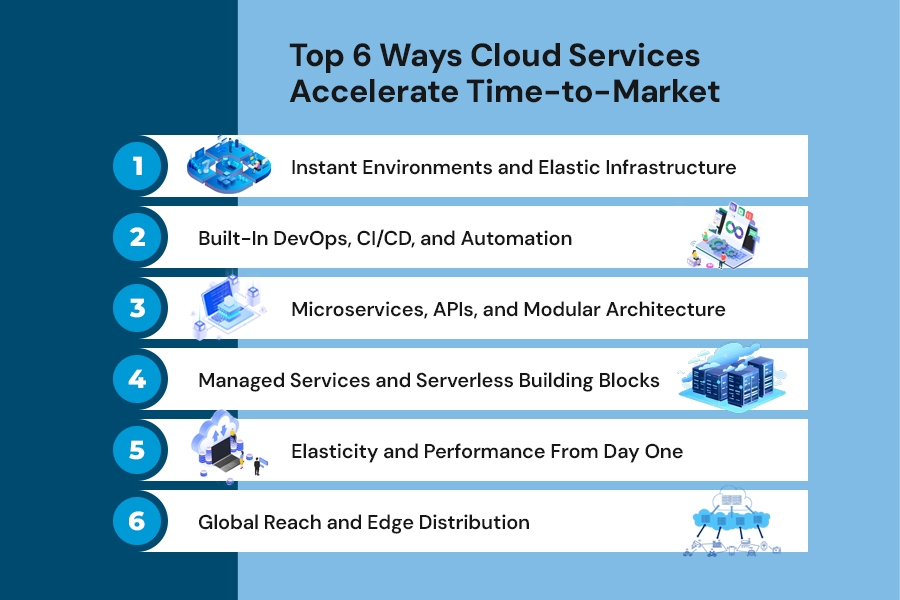
Cloud-first cloud computing platforms like AWS, Azure, and GCP provide elastic, programmable infrastructure that matches demand in near real time without capital expenditure and data center lead times.
Critical scale enablers:
Horizontal auto-scaling that automatically adjusts capacity based on real traffic patterns
Managed data stores sized via configuration reducing time-to-scale from weeks to hours
Global distribution through CDNs and multi-region patterns available from day one
For teams building HCM platforms or recruitment analytics tools, this means supporting a spike from 1,000 to 100,000 daily active users without re-platforming. One talent analytics platform saw traffic increase 40x during a major conference their cloud-first architecture handled it without a single page error or manual intervention.
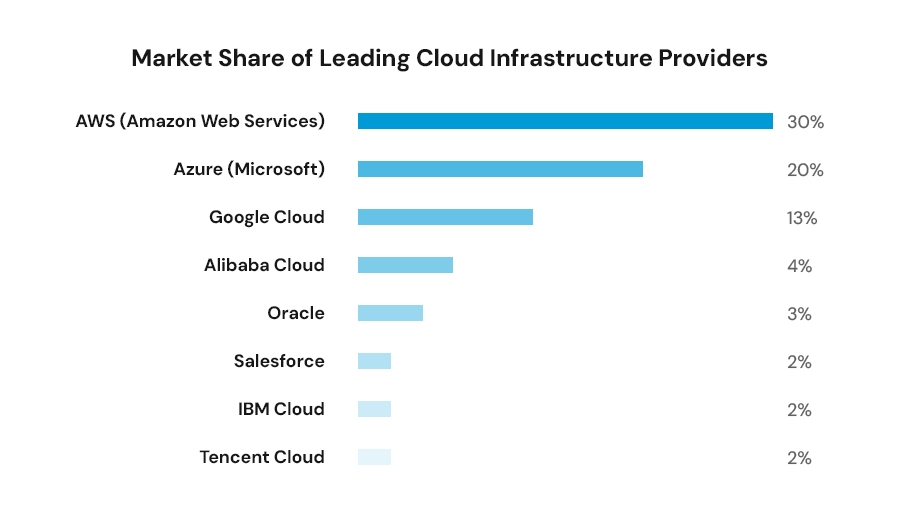
Advantages of Cloud Computing for Small Businesses
Even early-stage products benefit heavily from a cloud-first stance in competitive US markets where speed to enterprise-readiness determines funding and customer acquisition.
No heavy capex: Pay-as-you-go cloud computing services replace servers with OPEX that tracks real usage, preserving runway. For a Seed-stage HealthTech company, this means $150K–$300K in freed capital for hiring engineers or expanding sales.
Faster feature delivery: Pre-built services for databases, queues, AI APIs, and messaging compress time-to-market, allowing small teams to compete with larger incumbents. When a hospital scheduling platform needs AI-powered appointment optimization, managed ML services cut development from 4 months to 6 weeks.
Enterprise-grade reliability: Built-in backup, disaster recovery, and regional failover reduce the complexity of achieving high availability SLAs that enterprise healthcare and HR buyers require. The advantages of cloud computing for small business now include access to capabilities like global distribution and AI infrastructure previously only realistic for enterprises with large teams.
Cloud-First Cost Impact: Seed to Series B
| Stage | Traditional Infrastructure Annual Cost | Cloud-First Annual Cost | Savings / Runway Extension |
|---|---|---|---|
| Seed (0–10K users) | $180K–$250K | $40K–$80K | +$140K runway (8–10 months) |
| Series A (10K–100K users) | $400K–$600K | $150K–$250K | +$300K for product & sales |
| Series B (100K–500K users) | $800K–$1.2M | $400K–$600K | +$500K for market expansion |
Performance and Monetization: Built-In from Day One
In cloud-first cloud architecture, performance is treated as a systemic attribute from the design phase. Performance enablers include right-sized services (CPU vs memory-optimized nodes), data locality (placing compute closer to users), and async patterns (offloading non-critical work to queues). Cloud-first teams tie performance budgets into CI/CD pipelines regressions trigger alerts or block deployments.
For US SaaS companies where usage-based pricing has become standard, cloud-first architecture enables revenue models that cloud-later systems struggle to support. Fine-grained usage metering tracks per-tenant API calls, storage, and compute. Tiered SLAs route higher-paying tiers to isolated clusters with stronger performance guarantees. Regional pricing deploys per-region stacks to meet compliance needs and command premium pricing.
One payroll platform moved from flat $50/month pricing to usage-based $2 per employee this single change increased ARPU by 3x,but required metering infrastructure designed in from day one. Teams usually realize they built 'cloud-later' only when performance degradation, runaway cloud costs, or compliance blockers halt feature development. Our Cloud and DevOps Engineering practice helps teams avoid this trap.
Common Mistakes in "Cloud-First" Claims
Mistake #1 - Cloud-hosted monolith: Lifting traditional applications to cloud VMs without rearchitecting. You get cloud bills without cloud benefits.
Mistake #2 - Manual infrastructure changes: Using IaC for setup but making production changes via console clicks, creating configuration drift.
Mistake #3 - Single-region deployment: When that region has an outage, your platform goes dark unacceptable for enterprise SLAs.
Mistake #4 - Security as afterthought: Default security groups and unencrypted data stores block SOC2 and HIPAA certification.
Mistake #5 - No cost visibility: Running resources without tagging makes pricing decisions pure guesswork.
Practical Cloud Computing Strategies for CTOs
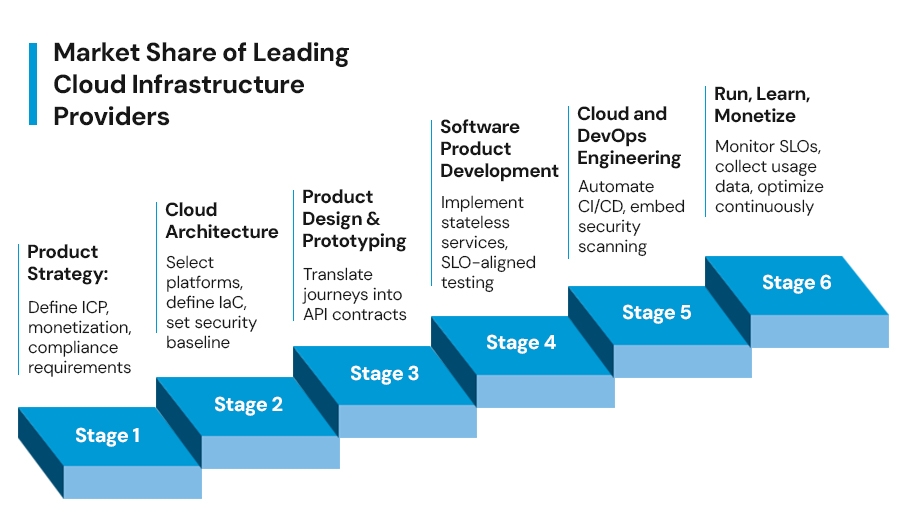
Start with a lean platform: Choose a primary hyperscaler and minimal set of managed cloud computing services. Define network, identity, and security configurations once through IaC, then reuse across products. Package infrastructure modules as reusable templates. This cuts new service setup from 2 weeks to 2 days.
Align roadmap with cloud capabilities: Use cloud capabilities as leverage in your Product Strategy & Consulting work. If your roadmap includes predictive analytics for HR platforms, managed ML services accelerate time-to-market by 3-6 months. Avoid building custom infrastructure already provided by platforms.
Bake in observability: Treat observability and cost management as core Product Design and Prototyping requirements. Centralize logging, metrics, and tracing aligned to customer-facing SLAs. Tag resources by product, environment, and tenant so cost reporting is trivial later.
Where Product Engineering Partners Help
For many startups and scale-ups, internal teams are stretched between roadmap delivery and operations. External product engineering services can de-risk cloud-first transformation by bringing patterns proven across dozens of platforms.
Typical contributions from mature Software Product Development partners include cloud-native reference architectures, platform engineering (IaC modules, CI/CD templates), security hardening (DevSecOps pipelines, governance models), and monetization infrastructure (usage metering, billing integration). These initiatives fall under modern product engineering services that blend architecture, implementation, and operational excellence.
Where Cloud-First Delivers Measurable Business Value
| Area | Cloud-First Benefit | Business Impact |
|---|---|---|
| Time-to-Market | Pre-built services, automated environments, CI/CD | 40% reduction in release cycles |
| Scaling | Auto-scaling, managed databases, global distribution | Handles 40× traffic without incidents |
| Reliability | Multi-AZ/region architecture, backups, DR patterns | 99.9% uptime with lean teams |
| Security & Compliance | Embedded controls, policy-as-code, audit logs | SOC 2 readiness in 4 months vs 12 months |
| Cost & Efficiency | Pay-per-use, right sizing, cost analytics | 30–50% infrastructure cost savings |
| Monetization | Built-in metering, tenant isolation, feature flags | Enables up to 3× ARPU growth |
Action Checklist for CTOs and Founders
Define 3–5 non-negotiable SLOs and ensure architecture meets them with elastic cloud computing resources
Choose a primary cloud and lock in a standardized stack of cloud computing platforms and services
Adopt IaC and CI/CD immediately no manual environments, even for MVP
Embed devops in cloud computing and security checks in pipelines before first production release
Design multi-tenant, metered-by-default services so monetization experiments don't require re-architecture
Treat observability and cost visibility as core requirements from day one
Final Thoughts: Architecture Is a Business Decision
Cloud-first architecture is easy to talk about. Designing it to survive real traffic spikes, real compliance audits, and real monetization complexity is significantly harder. The difference shows up in lost enterprise deals, delayed certifications, and emergency re-platforming that consumes resources planned for product innovation.
Teams that win in US HealthTech, HCM SaaS, and B2B platforms move fast repeatedly iterating on pricing, expanding to new regions, adding AI features, and passing enterprise security reviews without grinding to a halt. That capability comes from architectural decisions made in the first 90 days.
If you're evaluating your architecture or planning your next platform, the question isn't whether to be cloud-first it's whether you have the expertise to execute it correctly from day one. We help SaaS and platform teams design cloud-first architectures that scale efficiently, monetize flexibly, and pass enterprise scrutiny. Explore our product engineering services to see how architecture-led partnerships accelerate time-to-market while building for the long term.
Design Architecture That Scales Revenue