


 Updated on 29 September 2025

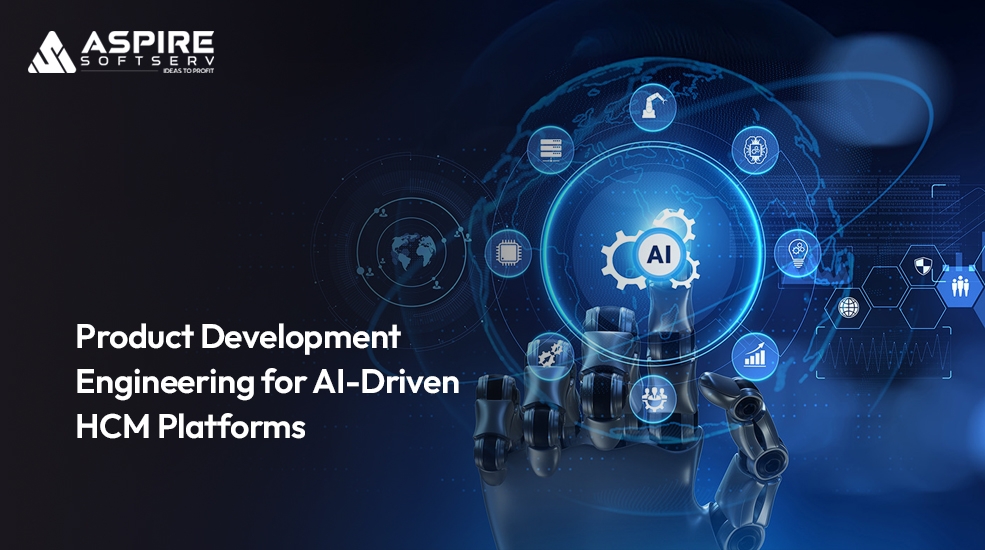
The human resources technology landscape has reached a critical inflection point. Traditional HCM systems, built for yesterday's workforce management needs, are buckling under the weight of modern enterprise requirements. Remote work complexities, evolving compliance mandates, and the desperate need for predictive talent analytics have exposed the fundamental inadequacies of legacy HR platforms.
Forward-thinking enterprises are turning to AI-driven HCM platforms engineered specifically for today's challenges through specialized product development engineering services. These aren't simply updated versions of existing systems they represent a complete architectural reimagining of how human capital management technology should function. Companies implementing professionally engineered AI-native HCM solutions report transformational outcomes: 45% reduction in operational overhead, 67% improvement in compliance adherence, and average cost savings exceeding $2.3 million annually.
Comprehensive HCM Platform Engineering
Modern HCM platforms must address the full spectrum of human capital management functions through integrated AI-driven solutions. Product engineering services that understand this complexity deliver platforms that seamlessly connect all HR operations rather than creating isolated point solutions.
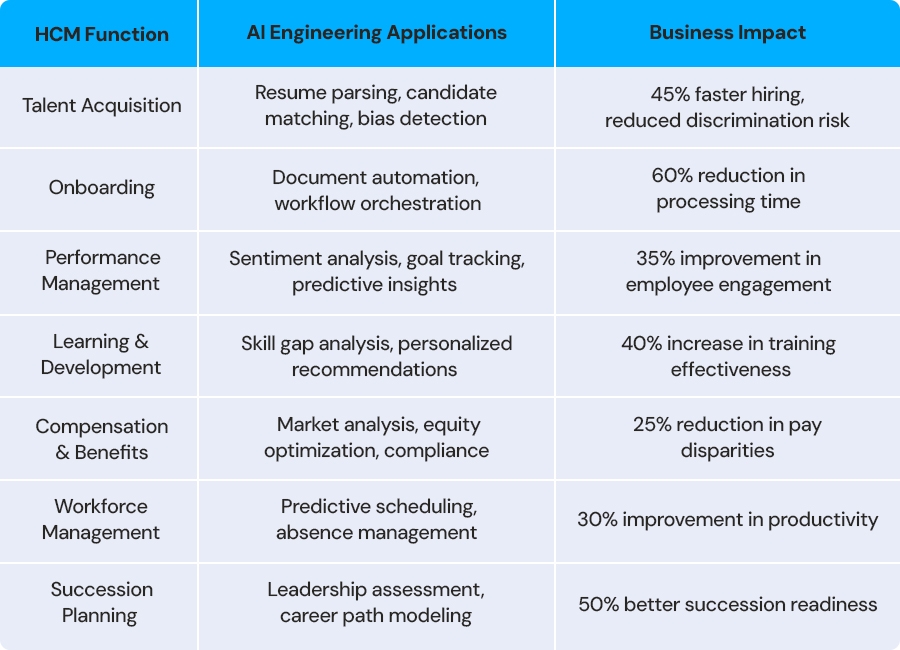
The question isn't whether to modernize your HCM infrastructure it's how quickly you can execute the transformation before competitive disadvantages become insurmountable.
The Modern Enterprise HCM Challenge
Enterprise leaders today face a perfect storm of HR technology challenges that legacy systems simply cannot address. The regulatory environment has fundamentally shifted with the introduction of AI bias legislation, GDPR enforcement evolution, and emerging algorithmic accountability laws. A single discriminatory decision powered by biased algorithms can trigger multi-million dollar settlements and permanent reputational damage.
Talent acquisition has become exponentially more complex as unemployment rates hit historic lows and remote work becomes the norm. Traditional applicant tracking systems lack the sophisticated matching algorithms needed to identify qualified candidates from global talent pools. The result is longer hiring cycles, higher recruitment costs, and missed opportunities to secure top talent.
Performance management in distributed workforces requires continuous feedback mechanisms and AI-powered sentiment analysis to maintain employee engagement without traditional face-to-face interactions. Learning and development programs must adapt dynamically to skill gaps identified through AI analysis of project outcomes and career progression patterns.
Perhaps most critically, the average enterprise now operates 47 different HR-related software tools, creating integration challenges that consume IT resources while preventing the holistic workforce analytics that drive strategic decision-making. This vendor sprawl increases operational costs by 35% while creating security vulnerabilities and data silos.
Engineering Architecture That Delivers Business Value
Modern AI-driven HCM platforms require sophisticated product engineering approaches that fundamentally differ from traditional enterprise software development. Digital product engineering services must architect solutions that seamlessly integrate artificial intelligence capabilities while maintaining the reliability, security, and compliance requirements of enterprise HR operations.
The foundation begins with cloud-native microservices architecture that enables independent scaling of different HCM functions based on demand patterns. During peak hiring seasons, recruitment modules can scale automatically without affecting payroll processing or employee self-service functions. This architectural approach prevents the system-wide slowdowns that plague monolithic HR platforms during high-usage periods.
AI-Native Service Integration Across All HCM Functions
The integration of AI services throughout the comprehensive HCM platform requires careful engineering to ensure that machine learning capabilities enhance rather than complicate existing HR workflows. Product engineering solutions implement specialized AI models for each HCM domain:
Talent Acquisition Intelligence: Natural language processing engines handle resume parsing across 40+ languages with 95% accuracy, while machine learning algorithms continuously improve candidate matching based on successful hiring outcomes and performance data.
Performance Analytics: Predictive analytics engines analyze workforce patterns across all HCM functions to identify potential retention risks, performance trends, and skill development needs months before they become critical issues.
Learning Optimization: AI-driven learning platforms analyze individual learning patterns, job requirements, and career aspirations to create personalized development paths that align with business objectives and succession planning needs.
Compensation Intelligence: Machine learning models continuously analyze market data, internal equity, and performance metrics to recommend compensation adjustments that maintain competitive positioning while ensuring regulatory compliance.
Technology Stack and Integration Architecture
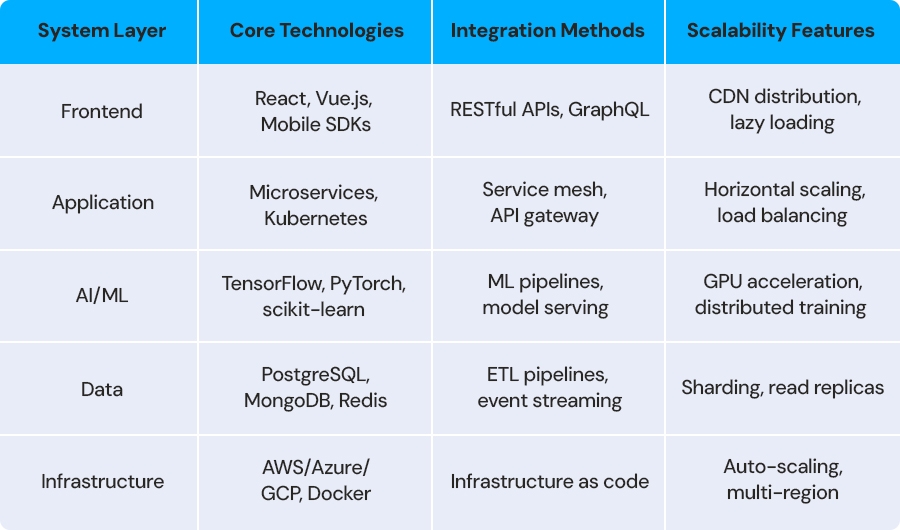
Data Architecture for Real-Time Insights
The data layer architecture enables real-time processing of employee information across all HCM functions while maintaining strict privacy controls and regulatory compliance. Event-driven data pipelines capture every interaction across the platform, feeding machine learning models that continuously improve system performance and decision accuracy for talent management, performance evaluation, and workforce planning.
Real-World Engineering Outcomes Across HCM Functions
A multinational manufacturing corporation with 120,000 employees across 15 countries faced comprehensive HCM challenges that extended far beyond recruitment. Their legacy systems created silos between talent acquisition, performance management, learning platforms, and succession planning. Product development engineering services delivered an integrated AI-driven platform that transformed their entire human capital management approach.
Talent Acquisition Transformation: AI-powered recruitment reduced time-to-hire from 90 to 43 days while improving candidate quality through sophisticated matching algorithms that consider not just current role requirements but also career progression potential and cultural fit.
Performance Management Evolution: Real-time sentiment analysis of employee communications and feedback systems identified engagement issues 6 months before traditional annual reviews would detect them, enabling proactive intervention and reducing turnover by 35%.
Learning & Development Optimization: AI analysis of skill gaps and career aspirations created personalized development paths that increased internal promotion rates by 40% while reducing external recruitment needs for senior positions.
Succession Planning Intelligence: Predictive models analyzing performance trends, leadership potential, and career trajectories improved succession readiness scores by 50% across all critical positions.
Within 18 months of deployment, the organization achieved remarkable transformation across all HCM functions. Annual HR operational costs decreased by $8.2 million through process automation and improved efficiency. Most significantly, the integrated approach eliminated data silos and enabled strategic workforce planning that directly supported business growth objectives.
Engineering Best Practices for Enterprise HCM
Machine Learning Operations (MLOps) forms the cornerstone of sustainable AI implementation across comprehensive HCM platforms. Product engineering consulting services must implement MLOps discipline that prevents AI models from becoming technical debt. Without proper monitoring, bias can creep into hiring algorithms, performance models can degrade, and compliance can be compromised.
Professional MLOps implementation includes:
Continuous model monitoring that tracks performance metrics and bias indicators across all HCM functions
Automated retraining pipelines that adapt to changing workforce patterns and regulatory requirements
Canary deployment strategies for safe rollout of model updates while maintaining system stability
Cross-functional model validation ensuring AI decisions align with business objectives
Privacy engineering has evolved from a compliance afterthought to a fundamental architectural requirement. Modern HCM platforms must implement privacy-by-design principles that protect employee data while enabling the analytics capabilities that drive business value across talent management, performance evaluation, and workforce planning.
Infrastructure automation ensures that comprehensive HCM platforms can scale dynamically to meet changing business requirements while maintaining cost efficiency. Auto-scaling capabilities handle seasonal hiring spikes, performance review periods, and learning campaign launches without over-provisioning resources during normal operations.
Overcoming Implementation Challenges
Legacy system integration represents the most significant technical challenge in comprehensive HCM modernization projects. Most enterprises have accumulated 10-15 years of employee data across multiple incompatible systems spanning recruitment, HRIS, learning management, and performance platforms. Product engineering solutions require sophisticated data synchronization strategies that maintain data integrity while enabling gradual migration.
The migration strategy typically follows a domain-by-domain approach:
Phase 1: Employee directories and basic information systems
Phase 2: Talent acquisition and recruitment platforms
Phase 3: Performance management and feedback systems
Phase 4: Learning and development modules
Phase 5: Compensation, benefits, and workforce management
Phase 6: Advanced analytics and succession planning
This approach minimizes business risk while allowing IT teams to gain experience with the new platform before migrating the most sensitive operations.
AI bias mitigation requires proactive engineering approaches across all HCM functions. Digital product engineering services implement explainable AI that provides detailed reasoning for every algorithmic decision, whether in recruitment, performance evaluation, or succession planning. Continuous bias monitoring tracks model decisions across demographic groups and automatically flags potential discrimination patterns.
Partner Selection for Comprehensive HCM Engineering
Selecting the right product development engineering services partner determines the success or failure of your comprehensive HCM modernization initiative. The evaluation process must assess deep understanding of all HR domain functions, not just isolated capabilities in recruitment or performance management.
Technical competency evaluation should focus on:
Full-Stack HCM Expertise: Proven experience across talent acquisition, performance management, learning systems, and workforce analytics
MLOps Capabilities: Demonstrated model lifecycle management across multiple HR domains
Integration Architecture: Experience connecting disparate HR systems and data sources
Regulatory Compliance: Understanding of employment law, privacy regulations, and AI governance across all HCM functions
Product engineering consulting partners must demonstrate thorough understanding of GDPR, HIPAA, SOC2, and emerging AI governance regulations as they apply to comprehensive employee data management. Request documentation of previous compliance audit results and ongoing monitoring procedures across all HCM domains.
Post-implementation support capabilities determine long-term success. Evaluate the partner's approach to continuous improvement across all platform functions, feature enhancement roadmaps, and incident response procedures. Ensure that support teams include both technical engineers and HR domain experts who understand the interconnections between different HCM functions.
Future-Proofing Your Comprehensive HCM Investment
Generative AI represents the next frontier in comprehensive HCM automation. Large language models will automate content creation across all HR functions: job descriptions for talent acquisition, performance review summaries, personalized learning content, and succession planning documentation. Product engineering services must architect foundations that accommodate these emerging capabilities.
API-first architecture ensures that new AI capabilities can be integrated across all HCM functions as they become available. Microservices design patterns allow individual components to be upgraded independently without affecting the entire platform ecosystem.
The roadmap for comprehensive HCM AI advancement includes:
Voice Interfaces: Natural language interactions for employee self-service across all HR functions
Computer Vision: Automated document processing for onboarding, compliance, and performance management
Autonomous Workflows: Minimal human intervention required for routine HR processes
Multi-Modal AI: Systems combining text, voice, and visual inputs for comprehensive employee experiences
Organizations that build flexible, extensible platforms today through expert product development engineering services will be positioned to adopt these capabilities as they mature across all HCM domains.
Conclusion: Strategic Transformation Through Comprehensive Engineering
The transformation to comprehensive AI-driven HCM platforms represents more than technology modernization it's a strategic imperative that determines competitive positioning across all aspects of human capital management. Organizations that partner with experienced product engineering services gain immediate operational advantages while building the foundation for long-term strategic success.
The engineering complexity of modern comprehensive HCM platforms requires specialized expertise that goes beyond traditional IT capabilities. Success depends on deep understanding of AI/ML engineering across all HR domains, regulatory compliance requirements, and enterprise integration patterns. The right product development engineering services partner brings proven experience, comprehensive HR knowledge, and operational excellence that accelerates transformation while minimizing implementation risks.
The cost of delaying comprehensive HCM modernization continues mounting through regulatory exposure, talent management failures, and operational inefficiencies across all HR functions. Investment in professional product engineering solutions pays for itself through measurable improvements in hiring efficiency, performance management, learning effectiveness, and workforce productivity that compound over time.
TL;DR
Comprehensive HCM Challenge: Legacy systems create operational silos across talent acquisition, performance management, learning, and workforce planning, costing enterprises millions in inefficiencies
Engineering Solution: AI-native platforms with integrated architecture deliver measurable improvements across all seven core HCM functions through specialized product development engineering services
Implementation Strategy: Domain-by-domain migration approach minimizes risk while enabling gradual transformation of entire HCM ecosystem
Partner Selection: Choose product engineering consulting services with proven expertise across all HCM domains, not isolated point solutions
Strategic Outcome: Transform comprehensive HR operations from cost center to competitive advantage through integrated AI-driven human capital management
Turn your HR system into a strategic advantage with modern engineering.