
Confidently manage every stage of your product’s journey.
From initial ideation to launch, iteration, and eventual sunset, managing a digital product requires strategic foresight and operational excellence. Our Product Lifecycle Management (PLM) services ensure your software products evolve with user needs, market trends, and technology advances—maximizing business value every step of the way.
Align. Build. Scale with a Product Strategy Framework
We help you build, launch, scale, and sustain digital products through a comprehensive lifecycle management framework. Our services span requirement analysis, roadmap definition, MVP launches, iteration cycles, maintenance planning, and more—bringing together cross-functional teams to ensure agility, quality, and long-term success.
With a deep focus on user experience, performance, and alignment to business goals, we make sure your products stay relevant and impactful.
Product Development and Lifecycle Management, End-to-End
Drive product success from ideation to retirement with a comprehensive and strategic approach.


Product Planning & Roadmap Design
Product Planning & Roadmap Design
Establish a clear, strategic vision for your product.

Requirement Discovery & Feature Prioritization
Agile Release Planning
MVP vs Full Product Strategy
Product-Market Fit Evaluation

Lifecycle Strategy & Governance
Lifecycle Strategy & Governance
Design governance models that drive continuous improvement.
Agile and Scrum Team Setup
CI/CD Coordination with Dev & QA
UX, Product, Engineering Alignment
Continuous Feedback Loops

Product Change & Version Management
Product Change & Version Management
Ensure stability and traceability as your product evolves.
Feature Change Control
Backward Compatibility Assurance
Changelog & Impact Documentation
End-User Communication Strategy

Quality & Compliance Management
Quality & Compliance Management
Maintain product integrity, security, and compliance.
Automated QA Frameworks
Regression Testing Planning
Performance & Security Reviews
Regulatory Standards Alignment (HIPAA, GDPR, etc.)

Maintenance, Sustenance & End-of-Life Planning
Maintenance, Sustenance & End-of-Life Planning
Support and evolve your product beyond launch.
LTS (Long Term Support) Planning
Technical Debt Reduction
Obsolescence Strategy
Documentation & Knowledge Transfer
End-to-End PLM Solutions for Seamless Product Lifecycle Management and Scalable Innovation
Full-Spectrum PLM Expertise
We manage digital products across industries, from startups launching MVPs to enterprises sunsetting legacy platforms.
Lifecycle-Centric Strategy
Every service we deliver aligns with your product’s lifecycle stage—ensuring context-aware decisions and continuity.
Tech-Enabled Efficiency
We integrate PLM tools like Jira, Aha!, GitLab, and Confluence to track, automate, and streamline execution.
User-Driven Innovation
End-user insights inform every phase—ensuring each iteration delivers meaningful improvements.
Agile at Scale
From single-team MVPs to scaled SAFe rollouts, we tailor agile methodologies to fit your product and team.
Security & Sustainability
Security, compliance, and sustainability are baked into every lifecycle decision—not bolted on later.
Global Delivery, Local Expertise
Our distributed teams ensure round-the-clock support and local market adaptability.
Case Studies: Real-World Success Stories
See how AspireSoftserv has helped organizations across industries use technology solutions to improve their business results, lower costs, and achieve meaningful growth.

Risk Assessment and Compliance Management System
A robust risk and security compliance platform enabling self-assessment, employee training, policy implementation, and vendor evaluation for end-to-end compliance.
Key Features
30% Faster Compliance Management
50% Faster Vendor & Client Onboarding
40% Improvement in Decision-Making Efficiency
60% Reduction in Compliance Operation Costs

Global – Private Market Investment Portal
A secure, AI/ML-powered Blockchain Investment Platform offering small investors global access to private markets with zero service fees and full compliance, designed by a leading FinTech Software Development Company.
Key Features
500%+ faster user acquisition
KYC in <150 sec
23.5% higher portfolio growth
Zero-fee, low-cost model
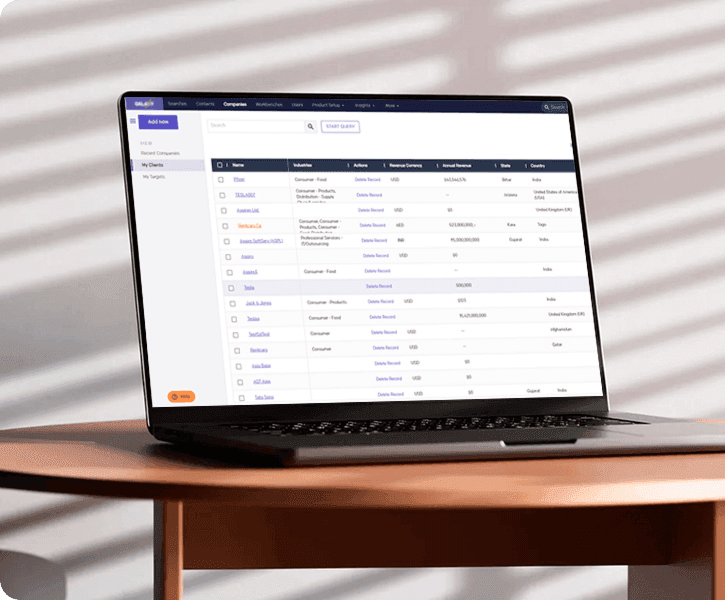
CRM portal for Executive Hiring
A centralized AI-driven AI Talent Acquisition Software enabling faster decisions, streamlined workflows, and accurate data management for global executive search operations.
Key Features
50% less time on candidate data
30% faster hiring decisions
40% reduced manual effort (6–8 days saved)
60% fewer document errors
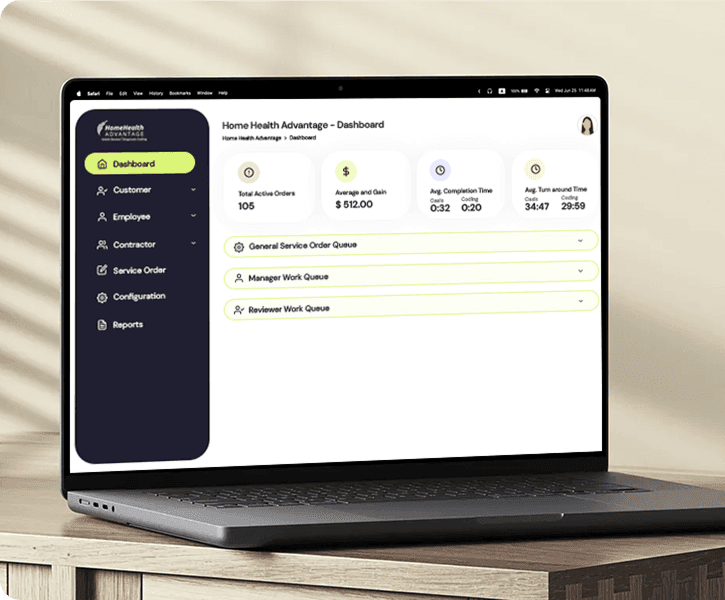
OASIS Service Order Management System
A secure, web-based clinical software service for digital service order submission, nurse review, and automated billing-ready report generation.
Key Features
50% Faster Order Processing
100% Standardized Billing Reports
30% Higher Order Visibility
Enhanced Compliance with Complete Audit Trails

HRIS Intelligent Tenant Analysis and Recommendations Portal
A scalable, AI-driven HRIS/HCM Tenant Analytics Platform automating tenant analysis, performance monitoring, and compliance checks for global enterprises.
Key Features
97% Consistency in Tenant Assessments
90%+ Increase in Operational Efficiency
95%+ Reduction in Compliance Risks
35% Revenue Growth Post-Implementation
Hear from our clients

Client praised the team’s adaptability, expertise, and responsiveness.
The team was highly adaptable and knowledgeable throughout the partnership, much to the client's delight and complete satisfaction. The team was highly responsive, and internal stakeholders were particularly impressed with their deep experience and diverse service offerings.

Sunit Sushil
Manager Customer Excellence at Abzooba Inc
Client praised Aspire’s skill, speed, and professionalism.
Excellent developer skills and professionalism. Aspire was able to meet deadlines with short notice, communicate efficiently with team members on multiple tasks, produce precision functions, and quickly solve our dysfunction within our website. Will definitely hire them again.

Julie Brown
President of Fenix Net Solutions
Client trusts Aspire for quality, agility, and Liferay expertise.
Since 2015, the client has been satisfied with Aspire SoftServ Pvt. Ltd.'s excellent performance. They use agile methodologies, delivering quality design work that has surprised the internal stakeholders. Moreover, they stand out for their skilled resources, who have great expertise in Liferay.

Tony Haux
Chief Compliance Officer





Want to accelerate software development at your company ? See how we can help.
We build custom software tailored to your unique needs—covering everything from front-end interfaces to core back-end systems.
Frequently Asked Questions
What is product lifecycle management (PLM), and why is it important for digital products?
Product lifecycle management (PLM) refers to the process of strategically managing a product from initial ideation through development, launch, growth, and eventual sunset. For digital products, PLM is essential to align the product with user needs, evolving technology, and business goals. Effective PLM streamlines development, improves quality, enhances collaboration, and ensures your product remains relevant, secure, and competitive throughout its lifecycle.
How does PLM support collaboration between cross-functional teams?
PLM provides a unified framework that brings together product, engineering, QA, UX, and business teams. By using centralized tools and clear processes for tracking, feedback, and change management, teams collaborate seamlessly from planning to release. This reduces silos, keeps everyone aligned on priorities, and accelerates innovation especially in distributed or global delivery models.
How can PLM solutions help reduce product development risks and errors?
PLM provides standardized workflows, clear documentation, traceable change management, and robust governance. Features like automated QA frameworks, regression testing, and real-time feedback loops help catch errors early. This enhances product stability, speeds up resolution of issues, and ensures compliance with industry standards or regulations, reducing risks during every release cycle.
Will PLM solutions integrate with my existing tools and workflows?
Yes, modern PLM solutions are built for integration. Whether you use Jira, Confluence, GitLab, Aha! or custom tools, our approach ensures seamless connectivity between product management, development, and operations. We tailor integrations to fit your unique tech stack, so your teams retain familiar workflows while benefiting from centralized visibility and automation.
How does end-of-life planning fit into PLM services for digital products?
End-of-life (EOL) planning ensures your product’s sunsetting is managed strategically. This includes long-term support plans, controlled feature retirement, technical debt management, comprehensive documentation, and smooth knowledge transfer. Our EOL processes help minimize user impact, meet compliance standards, and free up resources for innovation or new product launches.