
Manufacturing
Odoo ERP Implementation for Apparel Manufacturing Company
A phased ERP rollout unified sales, production, inventory, quality, and finance shifting a multi-location garment manufacturer from spreadsheets to real-time operations.
Overview
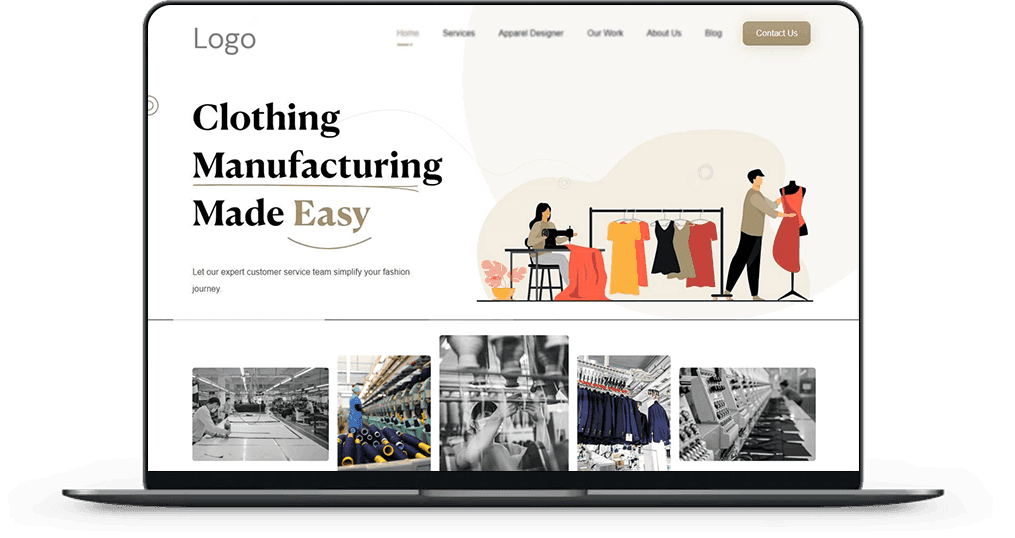
The client is a mid-sized apparel manufacturing company handling bulk garment production for domestic and export markets. Their operations covered fabric procurement, cutting, stitching, finishing, warehousing, and dispatch, managed across multiple locations.
Over the years, the company relied on spreadsheets, standalone accounting software, and manual production registers. As order volumes increased and delivery timelines tightened, these disconnected systems began to impact production planning, inventory accuracy, and overall operational control.
To address these challenges, the management decided to implement an ERP system that could connect sales, production, inventory, quality, and finance into a single operational platform.
Tech Stack



60%
faster decision-making with real-time visibility

32%
reduction in material wastage and rejections.

26%
shorter order-to-dispatch cycle time achieved.
Challenges
Each department worked with its own data, with sales using spreadsheets, stores relying on manual registers, and production depending on verbal updates, leading to daily coordination issues.
Stock availability was unclear at order confirmation, causing sales to commit delivery dates without material certainty and forcing last-minute production changes.
Rejections and fabric wastage were acknowledged but poorly tracked, as loss data was captured in registers at the end of shifts with little scope for analysis.
Production planning depended largely on supervisor experience, with no real-time visibility into work-order progress or shop-floor bottlenecks.
Material movement inside the factory was paper-driven, resulting in delayed entries, missing records, and frequent stock mismatches.
Sales returns and rework handling lacked clarity, with returned goods sitting in the warehouse while teams disagreed on stock impact and credit timelines.
Solution
Aspire Softserv delivered a phased Odoo ERP implementation connected all departments onto one platform. Custom workflows, automated approvals, real-time dashboards, and comprehensive training transformed operations from manual chaos to digital efficiency.

Ground-Level Process Assessment
Conducted an on-site operational study across sales, production, quality, and stores to document actual workflows instead of assumed processes.

Process-Aligned ERP Design
Mapped end-to-end manufacturing flows from sales order to finished goods dispatch, aligning ERP processes with real shop-floor practices.

ERP Module Configuration and Access Control
Configured core ERP modules for Sales, Inventory, Manufacturing, Quality, and Accounting with role-based access for each department.

Quality and Wastage Visibility
Implemented rejection, alteration, and wastage tracking at each production stage to capture reasons, quantities, and responsible operations.

Controlled Material Movement
Digitized store and material movements using structured internal transfers, consumption entries, and real-time stock updates.

Risk-Managed ERP Rollout
Rolled out the system in phases, starting with inventory and production, followed by sales and finance, supported by hands-on user training.
Business Impact
The ERP implementation delivered measurable improvements within go-live. The company achieved smoother cross-department coordination.

Faster Operational Decisions
60% faster decision-making with real-time stock visibility.

Preventive Maintenance Results
20% fewer production delays due to improved maintainance.

Reduced Production Losses
Material wastage and rejections reduced by 32%.

Shorter Order Turnaround
Cycle time per order reduced by 26% after process standardization.

Accurate Inventory Control
Inventory accuracy improved across raw materials, WIP, and finished goods.
Want to accelerate software development at your company ? See how we can help.
We build custom software tailored to your unique needs—covering everything from front-end interfaces to core back-end systems.