

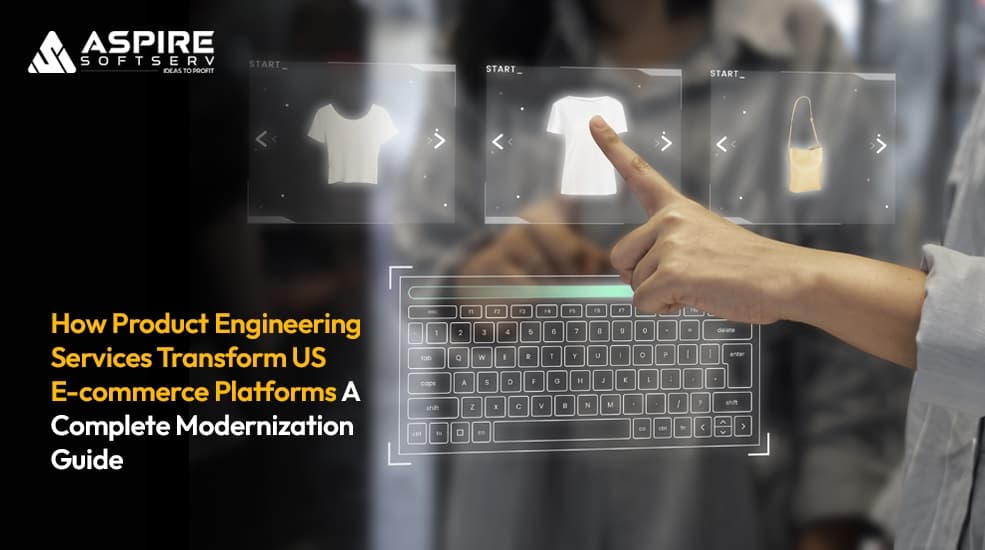
The US e-commerce landscape is experiencing unprecedented change. With online retail sales continuing to surge year over year, American businesses face immense pressure to deliver flawless digital experiences. Yet many enterprises remain trapped by legacy monolithic platforms that drain resources and stifle innovation.
The cost of maintaining outdated systems is staggering. According to Gartner, US e-commerce businesses lose an average of $5,600 per minute during downtime. Meanwhile, the Baymard Institute reports that 61% of American online shoppers abandon their carts if checkout takes longer than two minutes.
This is where strategic product engineering services become mission-critical. Rather than applying band-aid solutions to aging infrastructure, forward-thinking US retailers are embracing comprehensive platform modernization that positions them for sustained growth.
The Hidden Costs of Legacy E-commerce Platforms in US Markets
American retailers operating on monolithic e-commerce platforms face unique challenges that directly impact their bottom line. These legacy systems create cascading problems that compound over time:
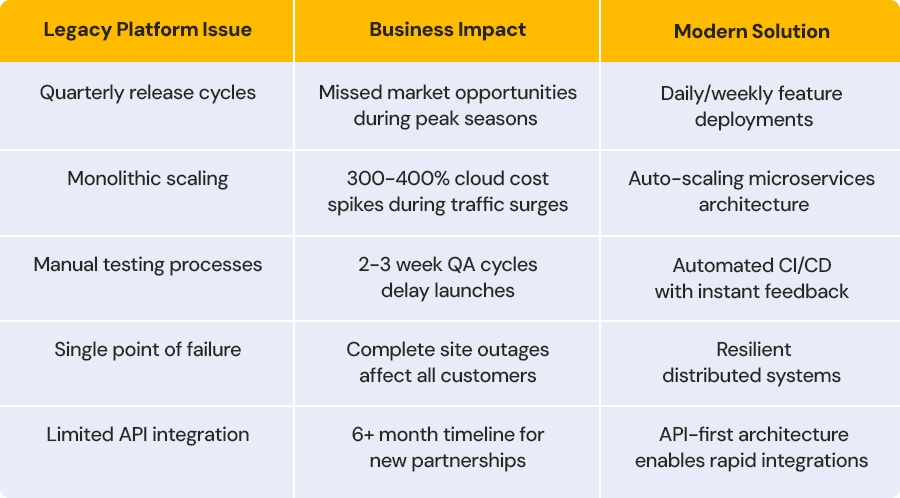
- Release Velocity Problems: Traditional platforms require 3-6 months for simple feature rollouts. During peak shopping seasons like Black Friday and Cyber Monday, this inflexibility becomes a competitive disadvantage when rivals deploy real-time promotions and personalized experiences.
- Compliance Vulnerabilities: US retailers must navigate complex regulations including PCI-DSS for payment processing, CCPA for California data privacy, and ADA compliance for accessibility. Legacy platforms struggle to adapt to these evolving requirements, creating legal exposure and financial risk.
- Scaling Limitations: When traffic surges during major sales events, monolithic systems often require scaling the entire application stack. This leads to resource waste and cloud bills that can spike 300-400% during peak periods.
- Integration Barriers: Modern commerce requires seamless connections to social media platforms, marketplace APIs, advanced analytics tools, and AI-powered recommendation engines. Legacy architectures make these integrations expensive and time-intensive.
The opportunity cost is equally significant. While competitors leverage modern product engineering approaches to deploy features weekly, traditional platforms remain locked in quarterly release cycles, missing crucial market opportunities.
Product Engineering Services : The Strategic Solution for E-commerce Modernization
Product engineering represents a holistic approach to platform transformation that goes beyond simple technology upgrades. It encompasses the entire lifecycle of digital product development, from architecture design to ongoing optimization.
Core Components of Modern Product Engineering
- Architecture Transformation : Moving from monolithic structures to microservices-based architectures that enable independent scaling and deployment. Each business function—catalog management, checkout processing, inventory tracking—operates as a separate service that can be updated without affecting other systems.
- Cloud-Native Infrastructure : Leveraging containerization and Kubernetes orchestration to create resilient, scalable platforms that automatically adjust to traffic demands. This approach reduces infrastructure costs by 25-30% while improving reliability.
- DevSecOps Integration : Implementing continuous integration and deployment pipelines with built-in security scanning. This reduces release cycles from months to days while maintaining enterprise-grade security standards.
- API-First Design : Creating headless commerce capabilities that separate frontend experiences from backend logic. This enables rapid deployment of new customer touchpoints across web, mobile, voice, and emerging channels.
- Observability Implementation : Deploying comprehensive monitoring, logging, and alerting systems that provide real-time visibility into platform performance and customer behavior.
Technical Framework for E-commerce Platform Modernization
Successful platform transformation requires a systematic approach that minimizes business disruption while maximizing long-term value. The most effective modernization strategies follow a phased implementation model:
Product Engineering Modernization Process Flow
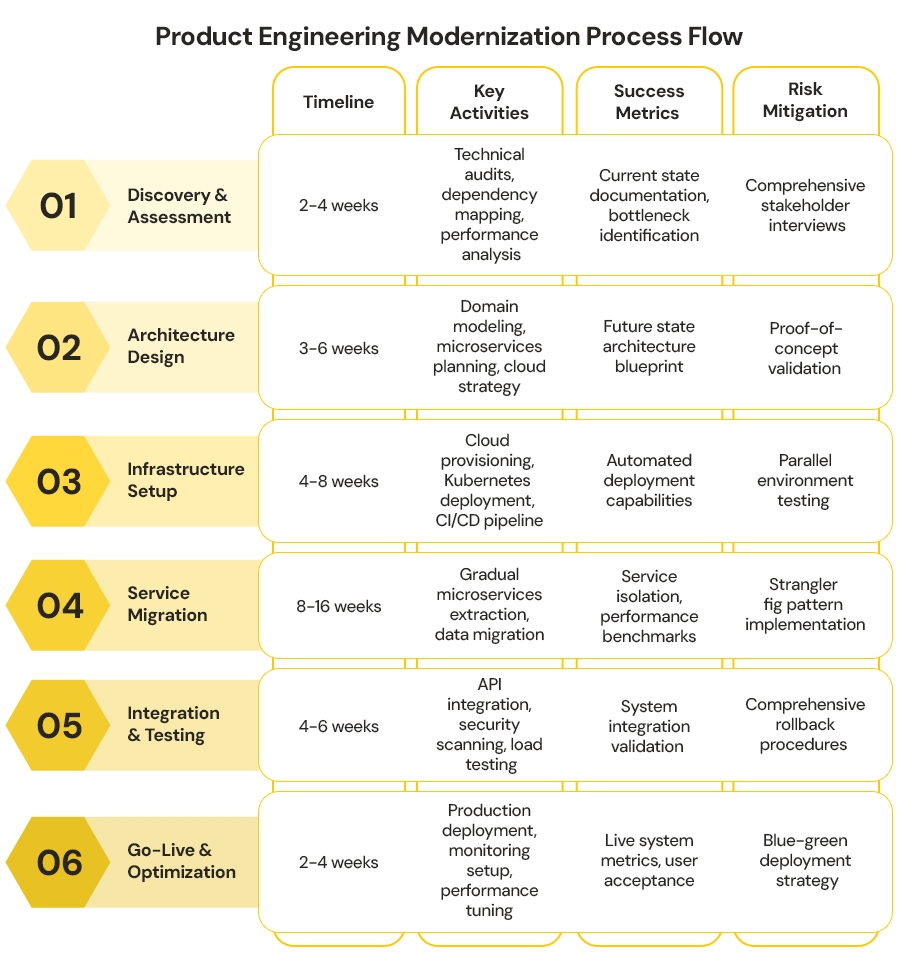
- Phase 1: Assessment and Planning Comprehensive technical audits identify pain points, dependency mapping, and performance bottlenecks. This phase typically reveals that 60-70% of development resources are consumed by maintaining legacy code rather than building new features.
- Phase 2: Domain-Driven Decomposition Breaking monolithic applications into logical business domains using established patterns. Product engineering teams identify clear boundaries between services like user authentication, product catalog, shopping cart, payment processing, and order fulfillment.
- Phase 3: Microservices Migration Gradual extraction of services using the strangler fig pattern. This allows businesses to modernize high-impact areas first while maintaining operational stability. Priority typically goes to customer-facing functions that directly influence conversion rates.
- Phase 4: Infrastructure Modernization Containerizing applications and deploying to Kubernetes clusters on major cloud providers. This phase includes implementing auto-scaling policies, load balancing, and disaster recovery procedures that ensure 99.99% uptime.
- Phase 5: Data Architecture Evolution Transitioning from monolithic databases to polyglot persistence models. Different data types require different storage solutions—Redis for session management, MongoDB for product catalogs, PostgreSQL for transactional data, and Elasticsearch for search functionality.
- Phase 6: Continuous Delivery Pipeline Establishing automated testing, security scanning, and deployment processes that enable multiple daily releases without manual intervention. This dramatically improves time-to-market for new features and bug fixes.
E-commerce Modernization Process Flow
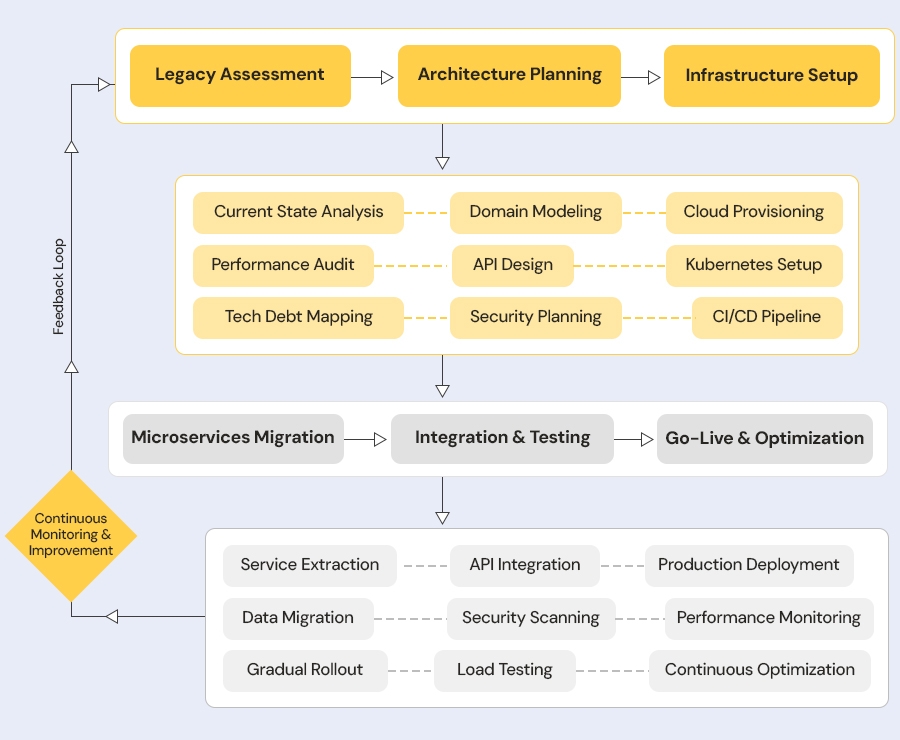
Key Process Checkpoints :
- Week 4: Architecture approval and stakeholder sign-off.
- Week 12: First microservice successfully extracted and deployed.
- Week 20: 80% of core services migrated with performance validation.
- Week 24: Full production deployment with monitoring systems active.
Compliance-Ready Platforms for US Retail Operations
American e-commerce businesses operate in a complex regulatory environment that requires proactive compliance management. Product engineering services address these challenges through systematic implementation of security and privacy controls :
- PCI-DSS Compliance : Modern architectures isolate payment processing into dedicated, compliant microservices that minimize scope and reduce certification costs. Tokenization and encryption are implemented at the infrastructure level rather than as application add-ons.
- CCPA and Privacy Regulations : Data governance frameworks ensure customer information is properly categorized, encrypted, and accessible for privacy requests. Automated systems can identify and purge customer data across all services within required timeframes.
- ADA Accessibility Compliance : With accessibility lawsuits increasing 320% year-over-year, compliant design becomes essential. Modern frontend frameworks include built-in accessibility testing and semantic markup that reduces legal exposure.
- SOC 2 and Enterprise Security : Comprehensive logging, access controls, and audit trails are embedded into the platform architecture. This provides the documentation and controls necessary for enterprise customers and partnership agreements.
Quantifiable Business Impact of Platform Modernization
The return on investment for comprehensive platform modernization extends far beyond technical improvements. US retailers consistently report measurable business outcomes :
- Revenue Growth : Companies typically see 15-25% increases in conversion rates due to improved site performance and personalized experiences. A leading US fashion retailer generated an additional $12 million in annual revenue after modernizing their checkout process through product engineering services.
- Operational Efficiency : Development teams become 40-50% more productive when freed from legacy maintenance tasks. New feature development accelerates from quarterly releases to weekly or daily deployments.
- Cost Optimization : Cloud-native architectures reduce infrastructure costs by automatically scaling resources based on demand. Companies report 20-35% reductions in hosting expenses while improving performance.
- Market Responsiveness : The ability to rapidly test and deploy new features enables data-driven optimization. A/B testing cycles compress from weeks to hours, allowing real-time optimization of customer experiences.
- Risk Reduction : Modern architectures with proper monitoring and automated failover reduce downtime incidents by 80-90%. This translates to millions in avoided revenue loss during peak shopping periods.
Advanced Capabilities: AI Integration and Personalization
Product engineering services enable sophisticated AI-powered capabilities that were previously unavailable to monolithic platforms. These advanced features drive significant competitive advantages :
- Real-Time Personalization : Machine learning models analyze customer behavior patterns to deliver individualized product recommendations, pricing strategies, and content experiences. This typically increases average order values by 20-30%.
- Predictive Analytics : Advanced data processing capabilities enable inventory optimization, demand forecasting, and customer lifetime value modeling. Retailers can reduce inventory costs while improving product availability.
- Conversational Commerce : Integration with AI chatbots and voice assistants creates new sales channels and customer service capabilities. Early adopters report 25% improvements in customer satisfaction scores.
- Fraud Detection : Machine learning algorithms identify suspicious transaction patterns in real-time, reducing chargebacks and false positives that impact customer experience.
Futureproofing Through Modern Architecture
The rapid pace of technological change requires platforms that can adapt to emerging trends and consumer behaviors. Product engineering services create architectures designed for continuous evolution :
- Headless Commerce Capabilities : Separating frontend and backend systems enables rapid deployment of new customer touchpoints including mobile apps, smart speakers, IoT devices, and augmented reality experiences.
- Edge Computing Integration : Content delivery and processing at edge locations reduce latency and improve performance for geographically distributed customers.
- Sustainability Optimization : Green computing practices and efficient resource utilization align with corporate sustainability goals while reducing operational costs.
- Blockchain Integration : Preparation for emerging technologies like cryptocurrency payments, NFT marketplaces, and supply chain transparency initiatives.
Implementation Strategy: When to Consider Product Engineering Consulting
Recognizing the right timing for platform modernization requires honest assessment of current capabilities and future business objectives. Key indicators include :
- Technical Debt Accumulation : When development teams spend more than 60% of their time maintaining existing code rather than building new features, modernization becomes financially justified.
- Performance Degradation : Page load times exceeding 3 seconds result in significant conversion loss. If optimization efforts on legacy platforms show diminishing returns, architectural changes become necessary.
- Competitive Pressure : When competitors consistently beat you to market with new features, the underlying platform likely constrains innovation velocity.
- Scaling Challenges : If traffic growth requires exponential infrastructure cost increases, cloud-native architectures provide better economics.
- Compliance Gaps : Regulatory requirements that cannot be efficiently implemented on current platforms create legal and financial risks.
Selecting Product Engineering Partners
Successful modernization requires experienced partners who understand both technical architecture and business objectives. Essential qualifications include:
- Proven Track Record : Look for consultants with specific experience modernizing e-commerce platforms for US retailers. Case studies should demonstrate measurable business outcomes, not just technical implementations.
- Comprehensive Capabilities : Effective product engineering encompasses strategy, design, development, deployment, and ongoing optimization. Partners should provide end-to-end services rather than isolated technical components.
- Industry Expertise : E-commerce platforms have unique requirements around performance, security, and compliance. Generic software consultants often lack the specialized knowledge necessary for successful implementations.
- Cultural Alignment : Long-term partnerships require shared values around quality, communication, and customer success. Evaluate potential partners based on their collaborative approach and commitment to your business outcomes.
Measuring Success: KPIs for Modernization Projects
Establishing clear success metrics ensures modernization efforts deliver intended business value:
- Technical Metrics : Site performance improvements (page load times, uptime percentages), deployment frequency, mean time to recovery from incidents.
- Business Metrics : Conversion rate improvements, average order value increases, customer acquisition costs, customer lifetime value changes.
- Operational Metrics : Development team productivity, time-to-market for new features, infrastructure cost optimization.
- Customer Experience Metrics : Net Promoter Scores, customer satisfaction ratings, support ticket volume reduction.
Conclusion: The Strategic Imperative for E-commerce Modernization
The choice facing US e-commerce businesses is not whether to modernize, but how quickly they can execute transformation while maintaining operational excellence. Companies that delay modernization face increasing technical debt, rising operational costs, and diminishing competitive position.
Product engineering services provide the expertise and methodology necessary to navigate complex modernization projects while minimizing business risk. The investment required for comprehensive platform transformation typically pays for itself within 12-18 months through improved efficiency, reduced operational costs, and increased revenue.
Ready to transform your e-commerce platform? Our product engineering specialists have helped dozens of US retailers successfully modernize their platforms while maintaining operational continuity. Contact us today to discuss how we can accelerate your digital transformation and position your business for sustained growth in the evolving e-commerce landscape.
Start Your E-commerce Modernization Journey