
Government Software Development Services
Build smarter, more transparent, and citizen-centric governance with our custom government software development services. We help federal, state, and local agencies modernize legacy systems, improve service delivery, enhance regulatory compliance, and foster civic engagement driving operational efficiency, public trust, and sustainable community growth.
Our Array of Government Software Development Services
Discover how Aspire SoftServ supports public sector entities with secure, compliant, and custom-built solutions. From municipal administrations and regulatory bodies to defense agencies and public health departments, we design software that simplifies complex bureaucratic processes, strengthens inter-agency collaboration, and improves overall civic service efficiency. Our goal is to empower your agency with technology that meets the unique demands of public service while ensuring transparency and accountability.

Government ERP & Resource Planning
We build integrated ERP systems tailored for government agencies, unifying budgeting, accounting, human resources, procurement, and asset management into a single, auditable platform. Our solutions ensure compliance with governmental accounting standards (e.g., GASB, IFRS), streamline fund allocation, and provide real-time visibility into fiscal performance, enabling data-driven policy decisions and responsible stewardship of public funds.

Regulatory Compliance & Case Management
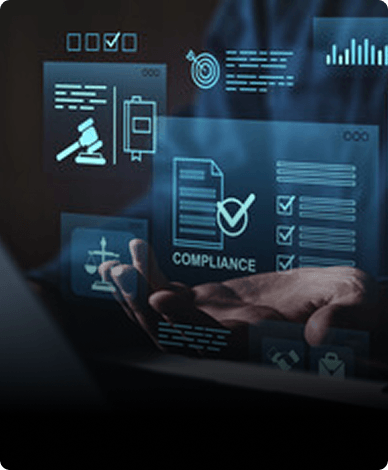
Managing inspections, enforcement actions, and public records requests is a complex, paper-intensive process. Our compliance and case management solutions provide workflow automation, document digitization, and secure repository management. This helps regulatory bodies ensure adherence to laws, accelerate case resolution, respond efficiently to FOIA requests, and maintain a clear chain of accountability.

Legacy System Modernization & Migration
Outdated, siloed systems pose significant security risks and operational inefficiencies. We specialize in modernizing legacy government software with advanced, scalable cloud-native or hybrid infrastructures. Our approach ensures improved cybersecurity posture, reduced maintenance costs, and the introduction of user-friendly interfaces that empower employees and citizens alike.

Citizen Services & Engagement Platforms
Our citizen engagement software helps agencies design and deploy digital portals for service requests, information access, and two-way communication. By reducing in-person wait times, automating application processes (e.g., permits, licenses), and providing transparent status tracking, we enable governments to significantly enhance citizen satisfaction, boost participation, and build stronger community relationships.

Public Health & Safety Systems
We develop critical software for health departments and emergency services, including disease surveillance, vaccine management, EMS dispatch, and disaster response coordination. Our platforms enhance situational awareness, optimize resource deployment during crises, and ensure timely communication between first responders and the public, ultimately saving lives and protecting community well-being.

Transparency & Open Data Platforms
We design software that promotes open government initiatives by making non-sensitive data easily accessible to the public. Our open data portals facilitate the publishing of datasets in machine-readable formats, enabling journalists, researchers, and citizens to analyze government performance, foster innovation, and enhance transparency in operations and spending.
Types of Government Software We Develop
We design and develop specialized government software that addresses the operational, regulatory, and service-delivery challenges of the public sector. Our solutions cover the entire spectrum of governmental functions from internal administration and financial management to external citizen services and regulatory enforcement helping agencies operate with greater efficiency, security, and public accountability.


Custom Software Solutions for Every Government Segment
We deliver specialized software solutions designed to optimize operations and service delivery across all levels and functions of government. From federal agencies to local municipalities, our custom software ensures improved efficiency, regulatory compliance, and measurable value for taxpayers.

Federal Agencies
Our experts design scalable, secure solutions for federal departments (Defense, Treasury, Homeland Security) to manage large-scale programs, national security data, and cross-agency initiatives, ensuring compliance with FISMA, NIST, and other federal mandates.

State Governments
We build custom platforms for state agencies to manage healthcare programs (Medicaid), transportation projects, unemployment benefits, and tax administration, ensuring interoperability between state and county systems.

County Administrations
Our tailored solutions support county governments with property tax assessment and collection, court case management, election systems, and public record management, streamlining operations that directly impact residents.

Municipalities & Cities
We develop integrated solutions for cities to manage urban planning, utility billing, business licensing, public works, and council meeting management, empowering smart city initiatives and improving quality of life.

Public Safety & Justice
Our platforms help police departments, courts, and correctional facilities with computer-aided dispatch (CAD), records management (RMS), case tracking, and evidence management, enhancing safety and ensuring due process.

Education & School Districts
We design solutions for state education departments and school districts to manage student information, funding, transportation, and compliance reporting (e.g., ESSA), supporting the entire educational ecosystem.

Public Health Departments
Our experts create software for managing community health initiatives, environmental health inspections, vital records, and emergency preparedness, protecting the well-being of the population.

Transportation & Infrastructure
We develop systems for DOTs and transit authorities to manage infrastructure projects, asset maintenance, public transit schedules, and funding grants, keeping communities connected and moving.

Legislative & Executive Offices
Our solutions empower legislative staff and executive offices with bill tracking, meeting management, constituent communication tools, and policy analysis platforms, supporting the core functions of democracy.
Want to accelerate software development at your company ? See how we can help.
Why Choose Aspire for Your Government Technology Needs
Explore a partnership built on a foundation of security, compliance, and a deep understanding of public sector challenges. We deliver tailored solutions that integrate seamlessly across departments, break down information silos, and modernize citizen services. Benefit from our proactive support and strategic insights, designed to optimize your agency's operations, enhance transparency, and maximize public trust and value.
Enhanced Security & Compliance
As a trusted government technology partner, we prioritize security above all. Our solutions are designed from the ground up to meet stringent regulations like FISMA, NIST, CJIS, and HIPAA where applicable. We implement robust encryption, identity and access management (IAM), and continuous monitoring to protect sensitive citizen data and national security information from evolving threats.
Operational Efficiency & Cost Savings
Government software automation streamlines cumbersome, paper-based processes, reducing manual labor and administrative overhead. By digitizing workflows for permits, licenses, case management, and procurement, we help agencies serve more citizens with existing resources, reallocating staff to high-value tasks and delivering significant return on investment for taxpayers.
Data-Driven Decision Making
We deliver integrated data platforms that break down silos between departments, providing a unified view of agency performance, citizen needs, and resource allocation. Advanced analytics and visualization tools empower leaders with actionable insights to formulate effective policies, justify budget requests, and demonstrate measurable outcomes to the public.
Citizen Trust & Transparency
Our platforms, such as open data portals and citizen service trackers, foster a new level of transparency in government operations. By making non-sensitive data and processes visible to the public, we help agencies build trust, demonstrate accountability, and actively engage residents in the workings of their government, strengthening the fabric of the community.
Interagency Collaboration & Integration
We develop solutions that facilitate secure data exchange and workflow coordination between different government entities—federal, state, and local. This interoperability is critical for effective public safety response, social service delivery, and emergency management, ensuring that agencies work together seamlessly for the public good.
Scalability & Future-Proofing
Government needs evolve, and technology must keep pace. We build solutions on scalable, modern architectures (often cloud-based) that can grow with your agency’s needs. This future-proofing ensures that your investment remains viable long-term, easily adapting to new mandates, increased service demands, and emerging technologies.
Success Stories
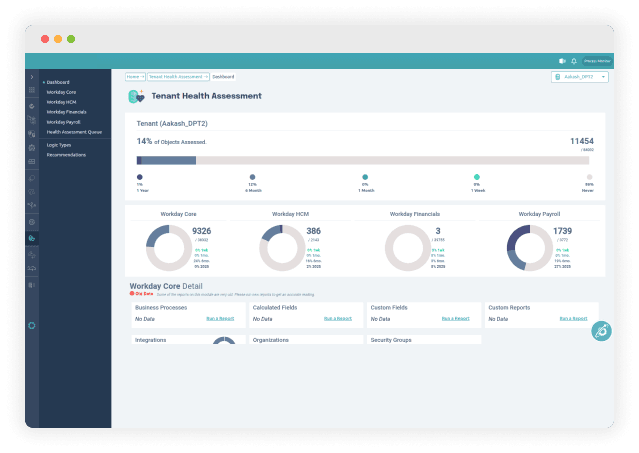
Workday Implementation Automation System
Automated platform for Workday users to manage updates, configs, and insights without external help.
#AutoSaaS#WorkToolsApp helps SaaS customers (Workday users) with tools & insights to self-manage platforms. It analyzes updates, configurations, tenants, & offers reports for feature adoption, visibility, security, integration, tracking, health, & optimization.
Fixed Income Securities Investment Portal
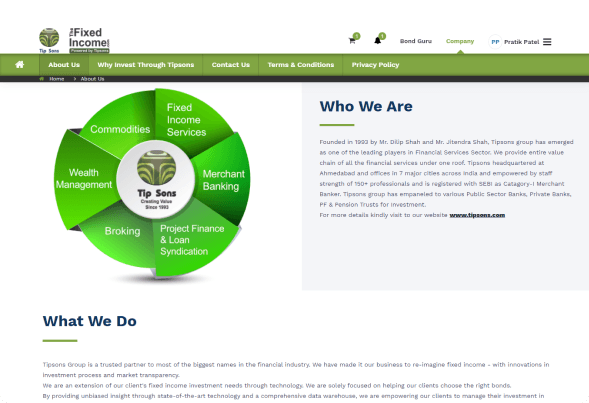
A marketplace for fixed income investments with B2C and B2B solutions.
#InvestmentBase#B2B2CPortal is an online marketplace for fixed income instruments, offering B2C & B2B SaaS solutions. Includes investment offers, KYC, forecasts, notifications, portfolio management, chat support, white-labeling, multi-site generation, calculations, & reports.
OASIS Service Order Management System for Home Health Agencies
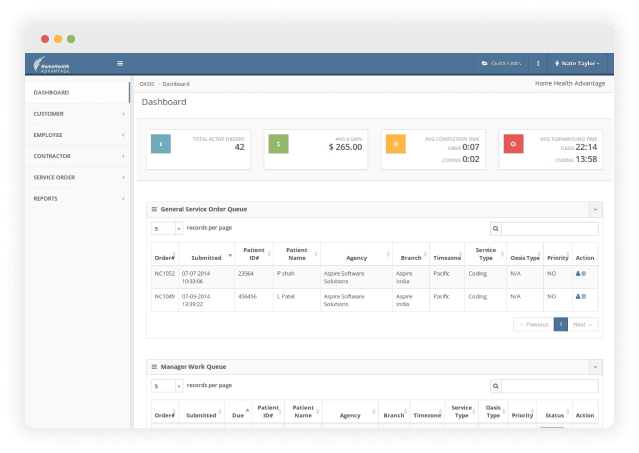
A web app for managing service orders and generating PDF reports from patient charts and OASIS data.
#HealthTech#HealthLogsCustomer team (Nurses) reviews patient charts & OASIS data, provides reports with billing codes & info to improve patient chart for insurance billing via a web app. Used by customers to submit orders & by managers/Nurses to process requests & generate PDF reports.
Public Hospital Enterprise Queue Management System
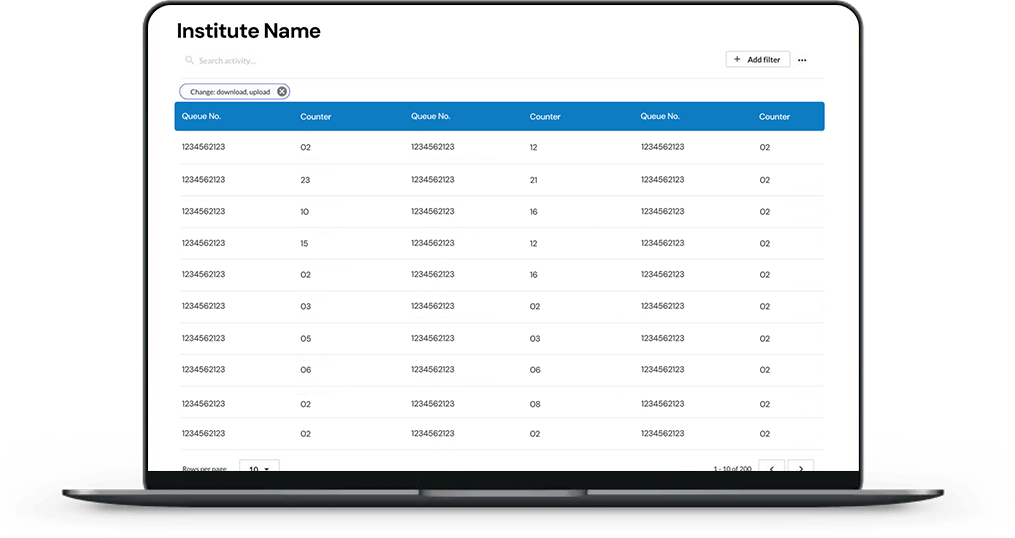
Streamline patient flow with a hospital queue system that reduces wait times and boosts efficiency.
#HealthcareEfficiency#SmartQueueA scalable hospital platform that streamlines patient registration, reduces wait times, and improves operational efficiency. Part of a comprehensive healthcare solution, it offers multilingual, device-agnostic access with centralized administration.
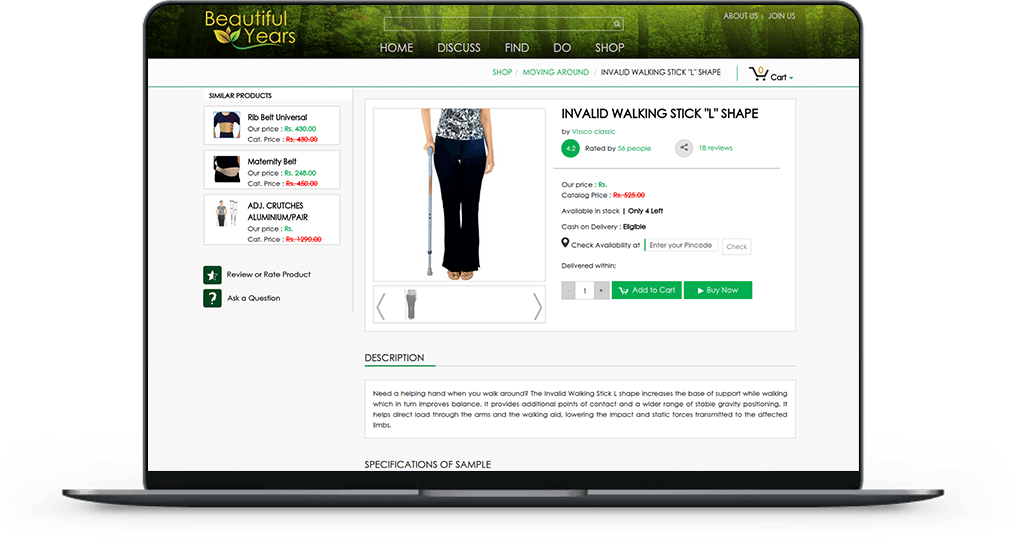
Elderly People Ecommerce Store
Senior-focused ecommerce for elderly care with voice navigation, expert help, virtual demos, and easy delivery.
#SmartShopping#ElderlyCareTechA purpose-driven online shopping platform designed for elderly individuals and caregivers, offering accessible navigation, expert recommendations, and seamless shopping experiences.
Advanced Technologies Redefining Public Sector Services
Our custom government solutions leverage cutting-edge technologies to empower agencies with efficient, secure, and intelligent operations. By integrating these digital innovations, the public sector can enhance service delivery, ensure fiscal responsibility, and build a more responsive, resilient, and forward-looking government.
Artificial Intelligence (AI) & Machine Learning

Artificial Intelligence (AI) & Machine Learning
AI streamlines government operations by automating document processing (e.g., forms, applications), powering chatbots for citizen inquiries, and identifying fraud in benefit claims. Machine learning models can analyze vast datasets to predict infrastructure maintenance needs, optimize resource allocation for social programs, and uncover insights that inform better policy decisions.
Cloud Computing & Hybrid Environments

Cloud Computing & Hybrid Environments
Cloud solutions offer government agencies unparalleled scalability, resilience, and cost-efficiency. We develop secure GovCloud and hybrid implementations that facilitate remote work, ensure business continuity, enable data sharing between agencies, and reduce reliance on expensive, outdated data center infrastructure.
Internet of Things (IoT) for Smart Cities

Internet of Things (IoT) for Smart Cities
IoT-enabled sensors monitor critical infrastructure in real-time, from traffic flow and bridge stress to water quality and energy consumption. This data enables predictive maintenance, optimizes public utility services, improves urban planning, and enhances public safety through environmental monitoring and gunshot detection.
Blockchain for Security & Transparency

Blockchain for Security & Transparency
Blockchain technology offers revolutionary applications for government, including secure digital identities for citizens, tamper-proof land registry and vital records, transparent tracking of grant disbursements, and streamlined voting systems. It builds an immutable chain of trust for critical transactions and records.
Data Analytics & Visualization

Data Analytics & Visualization
Centralized dashboards transform complex agency data into clear, actionable visual insights. Leaders can monitor KPIs across departments from public works project status to social program efficacy enabling proactive management, improved reporting to stakeholders, and demonstrable accountability for results.
Robotic Process Automation (RPA)

Robotic Process Automation (RPA)
RPA bots automate high-volume, repetitive tasks such as data entry between legacy systems, eligibility verification for benefits, and report generation. This frees up human employees for more complex, judgment-based work, dramatically increasing accuracy and operational throughput.
Cybersecurity Mesh Architecture

Cybersecurity Mesh Architecture
We implement advanced security frameworks that provide a centralized policy management and orchestration layer across disparate agency systems. This approach allows for more flexible, composable, and robust security that is critical for protecting distributed government digital assets.
Digital Twins for Urban Planning

Digital Twins for Urban Planning
Digital twins create virtual replicas of cities or infrastructure systems. Planners and engineers can simulate the impact of new policies, disaster scenarios, or construction projects in a risk-free digital environment, leading to better outcomes and more informed public investments.
Hear from our clients

Client praised the team’s adaptability, expertise, and responsiveness.
The team was highly adaptable and knowledgeable throughout the partnership, much to the client's delight and complete satisfaction. The team was highly responsive, and internal stakeholders were particularly impressed with their deep experience and diverse service offerings.

Sunit Sushil
Manager Customer Excellence at Abzooba Inc
Client praised Aspire’s skill, speed, and professionalism.
Excellent developer skills and professionalism. Aspire was able to meet deadlines with short notice, communicate efficiently with team members on multiple tasks, produce precision functions, and quickly solve our dysfunction within our website. Will definitely hire them again.

Julie Brown
President of Fenix Net Solutions
Client trusts Aspire for quality, agility, and Liferay expertise.
Since 2015, the client has been satisfied with Aspire SoftServ Pvt. Ltd.'s excellent performance. They use agile methodologies, delivering quality design work that has surprised the internal stakeholders. Moreover, they stand out for their skilled resources, who have great expertise in Liferay.

Tony Haux
Chief Compliance Officer





Building a Robust and Versatile Technology Stack
At Aspiresoftserv, we build reliable software solutions using a carefully chosen set of modern technologies. Our approach focuses on creating scalable, secure, and high-performing applications that meet the unique needs of every business. We combine proven tools and best practices to deliver smooth, efficient experiences for users and businesses alike.
- Database
- Frontend
- Backend
- Mobile
- Cloud & DevOps
 PostgreSQL
 MongoDB
 MySQL
MySQL Redis
Redis SQLite
Our Agile Roadmap for Seamless Government Software Development
Government software projects need a clear path that reduces risks and keeps goals on track. This roadmap uses short development cycles, regular feedback, and strict security checks to build solutions step by step. Each phase discovery, design, testing, and deployment keeps agencies, staff, and citizens involved, ensuring software stays reliable, compliant, and useful for the long run.
Discovery & Stakeholder Alignment
We structure initial agile sprints to conduct thorough stakeholder interviews, map complex bureaucratic workflows, and identify key pain points and compliance requirements. This ensures the solution is built with a deep understanding of the agency's mission, regulatory constraints, and citizen needs, fostering early buy-in from all departments.
Security & Compliance Architecture
Before feature development, we dedicate sprints to designing the security and compliance foundation. This includes defining data classification schemas, access control policies, audit trails, and ensuring the architecture aligns with NIST, FISMA, or other relevant frameworks. Security is integrated by design, not as an afterthought.
Modular Development & Integration
Agile development cycles focus on building and delivering functional modules incrementally, such as a permit application portal or a budget tracking dashboard. Each sprint includes integration with legacy systems (e.g., mainframes, existing databases) through secure APIs, ensuring new and old systems work together cohesively.
User Acceptance Testing (UAT)
Given the public impact of government software, every sprint incorporates extensive UAT with actual agency employees and, where appropriate, citizen focus groups. Feedback is integrated continuously, ensuring the final product is intuitive, meets actual user needs, and minimizes training overhead after deployment.
Phased Deployment & Change Management
Deployment is executed in carefully planned phases, often starting with a pilot program in a single department or locality. We provide comprehensive change management and training support to ease the transition for staff, address resistance, and demonstrate the value of the new system, ensuring smooth adoption across the organization.
Continuous Improvement & Evolution
Post-deployment, we use agile cycles to continuously gather feedback, monitor system performance, and implement enhancements. This allows the software to evolve with changing legislation, new administration priorities, and emerging technologies, protecting the agency's long-term investment and ensuring ongoing relevance.
Discovery & Stakeholder Alignment
We structure initial agile sprints to conduct thorough stakeholder interviews, map complex bureaucratic workflows, and identify key pain points and compliance requirements. This ensures the solution is built with a deep understanding of the agency's mission, regulatory constraints, and citizen needs, fostering early buy-in from all departments.
Security & Compliance Architecture
Before feature development, we dedicate sprints to designing the security and compliance foundation. This includes defining data classification schemas, access control policies, audit trails, and ensuring the architecture aligns with NIST, FISMA, or other relevant frameworks. Security is integrated by design, not as an afterthought.
Modular Development & Integration
Agile development cycles focus on building and delivering functional modules incrementally, such as a permit application portal or a budget tracking dashboard. Each sprint includes integration with legacy systems (e.g., mainframes, existing databases) through secure APIs, ensuring new and old systems work together cohesively.
User Acceptance Testing (UAT)
Given the public impact of government software, every sprint incorporates extensive UAT with actual agency employees and, where appropriate, citizen focus groups. Feedback is integrated continuously, ensuring the final product is intuitive, meets actual user needs, and minimizes training overhead after deployment.
Phased Deployment & Change Management
Deployment is executed in carefully planned phases, often starting with a pilot program in a single department or locality. We provide comprehensive change management and training support to ease the transition for staff, address resistance, and demonstrate the value of the new system, ensuring smooth adoption across the organization.
Continuous Improvement & Evolution
Post-deployment, we use agile cycles to continuously gather feedback, monitor system performance, and implement enhancements. This allows the software to evolve with changing legislation, new administration priorities, and emerging technologies, protecting the agency's long-term investment and ensuring ongoing relevance.
Let’s connect
Fill out the form, and we’ve got you covered.
Book a call or fill out the form below and we’ll get back to you once we’ve processed your request.
What happens next?
Our expert will follow up after reviewing your needs.
If required, we’ll sign an NDA to ensure privacy.
Our Pre-Sales Manager will send you a proposal.
Contact us
Our team would love to hear from you.
Frequently Asked Questions
What is government-specific ERP and how does it differ from commercial ERP?
Government ERP is a specialized system built to manage the unique financial and operational processes of the public sector. Unlike commercial ERP focused on profit and loss, it emphasizes fund accounting ( compliance with GASB standards), appropriation tracking, grant management, and public asset lifecycle management. It is designed to ensure transparency, accountability, and strict adherence to legal budgeting constraints.
How does digital transformation benefit government agencies and citizens?
Digital transformation in government leads to faster, more accessible citizen services (24/7 online portals), reduced operational costs through automation, improved data-driven policy making, and enhanced transparency. For citizens, it means less paperwork, shorter wait times, and easier access to information and services, ultimately increasing trust in public institutions.
What are the biggest security considerations for government software?
The foremost considerations are compliance with stringent frameworks like NIST SP 800-53 and FISMA, protecting sensitive Personally Identifiable Information (PII) of citizens, securing data both at rest and in transit with strong encryption, implementing robust identity and access management (IAM), and ensuring continuous monitoring and incident response capabilities to defend against increasingly sophisticated cyber threats.
How can legacy system modernization be achieved without disrupting critical services?
Modernization is best achieved through a phased, incremental approach. This can involve building modern interfaces on top of legacy systems (APIs), gradually migrating modules to the cloud, or using a parallel running strategy where the new and old systems operate simultaneously until the new system is fully validated. This minimizes risk and ensures continuity of critical government services.
What is the role of citizen experience (CX) in government software design?
Citizen experience is paramount. Software must be designed with the user—the resident—in mind. This means intuitive online forms, clear language instead of bureaucratic jargon, mobile-friendly access, and transparent status tracking for applications and requests. Good CX in government reduces help desk calls, increases digital adoption, and significantly improves public satisfaction.
How do you ensure interoperability between different government agencies' systems?
We ensure interoperability by adhering to open standards and developing secure APIs (Application Programming Interfaces) that facilitate data exchange. We often leverage existing government interoperability frameworks and promote the use of standardized data formats to break down information silos and enable seamless collaboration between agencies, which is crucial for effective service delivery and emergency response.
Browse Our Latest Insights